
Parallel Water Quality Testing Instruments
Description
Parallel Water Quality Testing Instruments are designed to measure various parameters of water quality simultaneously. These instruments utilize a parallel communications protocol, such as the general-purpose interface bus (GPIB), to efficiently transmit data from multiple sensors or testing modules at once. This allows for comprehensive monitoring of water quality by capturing a wide range of data points in a single operation.
Working Principle
Parallel Water Quality Testing Instruments operate by using multiple sensors that are capable of measuring different water quality parameters, such as pH, temperature, and contaminants, concurrently. The parallel communication protocol enables these instruments to send data from all sensors simultaneously, which is then processed to provide a comprehensive overview of the water's condition. This approach is particularly useful because it reduces the time required for testing and increases the reliability of the data by minimizing the potential for errors that can occur when tests are conducted sequentially.
Applications
These instruments are particularly useful in scenarios where rapid and comprehensive water quality assessment is critical. For example, they can be employed in environmental monitoring to assess the impact of industrial discharge on local water bodies. They are also valuable in municipal water treatment facilities to ensure that water meets safety standards before distribution. Additionally, they can be used in agricultural settings to monitor irrigation water quality, ensuring optimal conditions for crop growth.
Advantages over other Manufacturing - Electronics Manufacturing Equipment
Parallel Water Quality Testing Instruments offer significant advantages over traditional sequential testing equipment. By measuring multiple parameters simultaneously, they reduce the time required for comprehensive water quality analysis. This efficiency is particularly beneficial in situations where quick decision-making is essential, such as in emergency response scenarios involving chemical spills. Furthermore, the parallel data processing capability enhances the accuracy and reliability of the results, as it minimizes the potential for errors associated with time delays between sequential measurements.
Limitations
One limitation of Parallel Water Quality Testing Instruments is the potential complexity of their setup and calibration, which may require specialized knowledge and training. Additionally, the initial cost of acquiring these instruments can be higher compared to simpler, single-parameter testing devices. The complexity of the system may also lead to increased maintenance requirements, as multiple sensors and communication interfaces need to be regularly checked and calibrated to ensure optimal performance.
Considerations
When considering the implementation of Parallel Water Quality Testing Instruments, it is important to evaluate the initial costs, which can be substantial due to the advanced technology and multiple sensors involved. Operating expenses should also be considered, as these instruments may require regular maintenance and calibration to maintain accuracy. Durability is another factor, as the instruments need to withstand various environmental conditions if used in field applications. Accuracy is a critical consideration, and potential users should ensure that the instruments are capable of providing reliable data across all measured parameters. Finally, replacement and maintenance costs should be factored into the decision-making process, as these can impact the long-term cost-effectiveness of the instruments.

from Arjay Engineering
The FluoroCheck II is a benchtop and transportable unit for discrete sample measurements of ppm hydrocarbons in water. Direct water samples for screening or an EPA approved hexane oil extraction method may be used. Benchtop and field monitoring of petroleum oils in: wastewater and groundwater. [See More]
- Interface Options: Parallel
- Form Factor: Portable; Lab / Benchtop
- Water Quality Parameters: Water Quality Measurement Instrument; Oil/Water
- Oil in Water Monitor: 0 to 500
from Peak Process Controls Inc/Sigrist
Applications include oil leakage into condensate, wastewater, cooling water [See More]
- Interface Options: Serial; Parallel
- Form Factor: In-situ / Field
- Water Quality Parameters: Water Quality Measurement Instrument; Oil/Water
- Oil in Water Monitor: 0 to 500
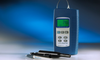
from Lovibond® Tintometer®
The SensoDirect 150 is designed for multi purpose operation and measures pH/Redox, dissolved oxygen and conductivity/TDS. It incorporates an intuitive user interface, large, easy to read display and is supplied with a sturdy handy case with electrodes, buffer solution and accessories. Highlights. [See More]
- Interface Options: Serial; Parallel
- Form Factor: Hand Held ; Portable; In-situ / Field
- Water Quality Parameters: Water Quality Measurement Instrument; pH; Measures ORP/Redox; Measures Conductivity / Dissolved Solids; DissolvedO2
- pH range: 0.0 to 14