
Mechanical Float Switch (Relay Contact) Liquid Leak Detectors
Last Updated: April 1, 2025
Description
Mechanical Float Switch (Relay Contact) Liquid Leak Detectors are devices designed to detect the presence of liquid leaks. They operate by using a float mechanism that triggers a relay contact when a certain liquid level is reached, indicating a leak.
Working Principle
Mechanical float switches work on the principle of buoyancy. A float containing a permanent magnet rides on the surface of the liquid. As the liquid level changes, the float moves, and this motion is guided by a stem containing a reed switch. When the float reaches a certain level, the magnet actuates the reed switch, closing or opening an electrical circuit. This simple mechanism makes them useful for detecting liquid levels reliably and cost-effectively .
Applications
Mechanical float switch liquid leak detectors are commonly used in oil-water separation systems to determine interface levels. They are also employed in multi-parameter sensor systems where precise liquid level detection is crucial .
Advantages over other Liquid Leak Detectors
Mechanical float switches offer several advantages over other types of liquid leak detectors. They are low-cost, simple, and dependable, making them a popular choice for many applications. Unlike solid-state switches, they are not affected by dirt, mist, magnetic fields, or extreme temperature ranges, which enhances their reliability in various environments .
Limitations
One significant limitation of mechanical float switches is their inability to be used with highly viscous materials. Additionally, they have a limited contact life cycle and a slower response time compared to solid-state switches. Their large size can also be a disadvantage in applications where space is a constraint .
Considerations
When considering mechanical float switch liquid leak detectors, it is important to factor in initial costs, which are generally low compared to other types of detectors. Operating expenses are minimal due to their simple design and low maintenance requirements. However, their durability can be affected by the environment in which they are used, particularly if the liquid is dirty or contains debris that can impede float movement. Accuracy is generally reliable, but regular maintenance and inspection are recommended to ensure optimal performance and to address any potential issues with the float mechanism .

from Krueger Sentry Gauge Co.
The Leak Type K Gauge is a reliable, vertical type leak monitor used for detecting leaks in the annular/interstitial space of a double wall above ground containment tank (AST's). Its simple mechanical design promotes durability, minimal upkeep, quick installation, and easy/inexpensive repairs. This... [See More]
- Leak Detection Method: Mechanical Float Switch (Relay Contact)
- Detector Features: Built in Alarm Indicator (optional feature)
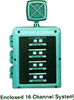
from Uehling Instrument Company
How does it work? The sensor ultrasonically recognizes the attenuation and dielectric properties of the liquid or air present. Digital sampling insures precise interpretation. The resulting output signal identifies the condition sensed. When an alarm condition is sensed by Level Alert, an audible... [See More]
- Leak Detection Method: Mechanical Float Switch (Relay Contact)
- Output Options: Switch or Alarm Signal
- Specific Detectable Liquid Types: Water
- Detector Features: Built in Alarm Indicator

from Gems Sensors & Controls
Designed to detect presence of liquid in sumps, attached access pipes, annular spaces, or locations requiring a small float-operated sensor. Two models to fit 1-1/2" and 2" standard piping. [See More]
- Leak Detection Method: Mechanical Float Switch (Relay Contact)
- Output Options: Switch or Alarm Signal
- Specific Detectable Liquid Types: Water