Go to GlobalSpec.com Home
Newsletter   FREE GlobalSpec e-Newsletters
Receive the latest news, trends, and technology relevant to your work.
(See Titles)

Chapter 4: Modifying Reagents

By Srdjan M. Bulatovic
From Handbook of Flotation Reagents: Chemistry, Theory and Practice: Flotation of Sulfide Ores

4.1 CLASSIFICATION OF MODIFYING REAGENTS

Modifying reagents, commonly known as regulators, can be regarded as the most important chemicals in mineral processing, which control the interaction of collectors between individual minerals. With the use of modifying reagents, selective adsorption of collectors on specific minerals can be increased or can be decreased to achieve the separation of individual minerals. Because of the use of modifying reagents, it is possible to isolate individual mineral sulfides of lead, zinc and copper from complex sulfide ores. Similarly, it is possible to selectively separate calcium-containing minerals, such as fluorite, scheelite, and calcite from each other.

Regulating reagents, under different conditions, can show either activating or depressing action in flotation. Therefore, it is not possible to strictly classify regulating reagents into specific groups. A general classification of the modifying reagents is shown in Figure 4-1. The principal classes include inorganic modifying reagents and organic modifying reagents.
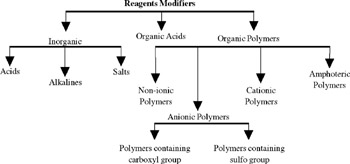

Figure 4.1: Classification of modifying reagents

Acids, alkalis and metal salts represent inorganic modifying reagents. Organic modifiers are chemicals that contain polar groups, such as OH, COOH, CO, NH 2, NH and SO 3H. On the basis of the character of the polar group, which influences the action of the polymer, organic polymers can be divided into the following four subgroups:

  1. Non-ionic polymers are chemicals that contain hydrolyzing polar groups: OH, CO, COOH, but carry no electrical charge.

  2. Anionic polymers contain polar groups: COOH, SO 3H, OSO 3H.

  3. Cationic polymers contain polar groups: NH 2,...

Copyright Elsevier B.V. 2007 under license agreement with Books24x7

Products & Services
Biotechnology products are made by modifying living organisms, usually at the molecular level, for specific industrial processes. They include tissue cultures, prepared media, biosensor arrays, and reagents. Learn more about Biotechnology Products
Chemical and material processing services modify or produce chemicals, powders, foods, minerals, rubber, plastics, adhesives, and other bulk materials on a contractual, toll or fee basis. Common processes include compounding, distillation, drying, formulation, mixing, blending, purification, extraction, synthesis, and powder milling. Search by Specification | Learn more about Processing Services
Inorganic chemicals, inorganic salts and inorganic compounds are substances of mineral origin that do not contain carbon in their molecular structure. Learn more about Inorganic Chemicals and Compounds
Deionizers remove the ionized minerals and salts (both organic and inorganic) from a solution by a two-phase ion exchange procedure. Learn more about Deionizers
Fuel additives are chemical substances that are added to gasoline, diesel, kerosene and other fuels to impart or improve certain properties. Learn more about Fuel Additives

Product Announcements
Cheap Tubes, Inc. - Carboxyl (COOH) Functionalized Carbon Nanotubes
Cheap Tubes is The Source for COOH Functionalized Nanotubes"! Our SWNTs and MWNTs are available with either Hydroxyl (OH) or Carboxyl (COOH) functional groups bonded to the ends and sidewalls of the... (read more)
Cheap Tubes, Inc. - Hydroxyl (OH) Functionalized Carbon Nanotubes
Cheap Tubes is "The source for OH Functionalized Nanotubes"! Our SWNTs and MWNTs are available with either Hydroxyl (OH) or Carboxyl (COOH) functional groups bonded to the ends and sidewalls of the... (read more)
Cheap Tubes, Inc. - Single Walled Nanotubes
Cheap Tubes="The Source for Single Walled Nanotubes-SWNTs" are CCVD grown and acid purified offering the best match of price and performance. Don't buy SWNTs elsewhere at $250-$500 per gram when you... (read more)
Wilkens-Anderson Company - LINE OF REAGENTS AVAILABLE FROM WILKENS-ANDERSON
A line of DPD Powder Pack Reagents for chlorine water analysis is available from Wilkens-Anderson. The line of powder reagents are pre-measured unit doses specifically formulated for use in Hach®... (read more)
Photovolt Instruments Inc. - Karl-Fischer Reagents
Photovolt Karl-Fischer reagents for Moisture analysis by coulometry. We have been selling KF reagents for over 30 years and our reagents are compatible with nearly all brand of coulometric titrators. (read more)
Mettler-Toledo Thornton Inc. - Portable TOC Analysis: 550 TOC
The new 550TOC Analyzer from Thornton uses proven UV Oxidation technology to rapidly and accurately measure Total Organic Carbon in pure and ultrapure water applications. (read more)
Kett US - Micro Moisture Analyzer
The FM300 Micro Moisture Analyzer provides accurate moisture analysis as low as two parts per million (ppm). (read more)
Anton Paar - Synthos 3000 Microwave Oven
Synthos 3000 is a high performance microwave instrument for the synthesis of valuable compounds in parallel and on a large scale. (read more)

Topics of Interest
5.1 INTRODUCTION Polymers of different chemical composition are used in the mineral processing industry as flocculants, coagulants and dispersants. The number of these polymers continues to grow and... (Read More)
8.1 INTRODUCTION In any flotation system, the use of the collector alone is very rare and may be sufficient for selective flotation if the minerals differ sharply in their flotation properties. In... (Read More)
Reagents are the most important part of the flotation process. In the early stage of the development of the flotation process, the major advances were due to better flotation reagents. In developing a... (Read More)
2.1 CLASSIFICATION On a broad basis, collectors can be defined as organic chemical substances in which the molecular structure is divided into a non-polar and a polar group. The non-polar portion... (Read More)
Without reagents there would be no flotation, and without flotation the mining industry, as we know it today, would not exist. Reagents in mineral processing are therefore an inseparable part of the... (Read More)