Seals and Sealing Handbook, Fifth Edition
An introduction to the subject of sealing technology, this book provides an understanding of the issues involved and sufficient information to assist with achieving reliable and effective sealing.
 TABLE OF CONTENTS
 This chapter is designed to provide a first step to the solution of seal failures. Seal failure analysis should not be undertaken casually. A simple look at the seal in isolation is unlikely to provide a reliable diagnosis. This chapter should be complemented by both the relevant technical chapter earlier in the book and also the references for the seal type being investigated, as they will potentially provide further in-depth information. It is important to have as much evidence as possible for the investigation. Not only the seal but the equipment hardware and samples of fluid are also necessary together with good information on the history of the equipment.
This section is divided into a section for seals, as covered in sections 2.2 to 2.7 and a further section for bolted joints and gaskets as discussed in section 2.8. The section on seals is further subdivided to cover elastomer, plastic and metal seals.
The majority of the description in this section, and also other literature, [6] relates to O-rings, but the general principles will apply to most types of elastomer seal, including the static areas of dynamic seals.
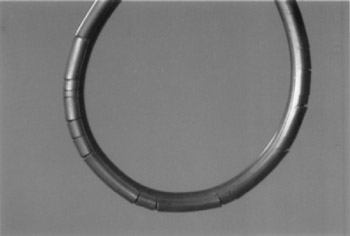
Ageing of the material has been caused most probably by exposure to UV radiation or excessive ozone. The storage and handling of the seals should be reviewed.