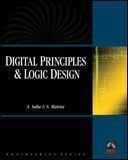
 | This text/reference provides students and practicing engineers with an introduction to the classical methods of designing electrical circuits, but incorporates modern logic design techniques used in the latest microprocessors, microcontrollers, microcomputers, and various LSI components. The book provides a review of the classical methods e.g., the basic concepts of Boolean algebra, combinational logic and sequential logic procedures, before engaging in the practical design approach and the use of computer-aided tools. The book is enriched with numerous examples (and their solutions), over 500 illustrations, and includes a CD-ROM with simulations, additional figures, and third party software to illustrate the concepts discussed in the book. |
 TABLE OF CONTENTS
 Digital Principles & Logic Design
Chapter 1 - Data And Numbers Systems
One of the first things we have to know is that electronics can be broadly classified into two groups, viz. analog electronics and digital electronics. Analog electronics deals with things that are continuous in nature and digital electronics deals with things that are discrete in nature. But they are very much interlinked. For example, if we consider a bucket of water, then it is analog in terms of the content i.e., water, but it is discrete in terms of the container, i.e., bucket. Now though in nature most things are analog, still we very often require digital concepts. It is because it has some specific advantages over analog, which we will discuss in due course of time.
Many of us are accustomed with the working of electronic amplifiers. Generally they are used to amplify electronic signals. Now these signals usually have a continuous value and hence can take up any value within a given range, and are known as analog signals. The electronic circuits which are used to process such signals are called analog circuits and the circuits based on such operation are called analog systems.
On the other side, in a computer, the input is given with the help of the switches. Then this is converted into electronic signals, which have two distinct discrete levels or values. One of them is called HIGH level whereas the other is called LOW level. The signal must always be in either of the two levels. As long as the signal is within a prespecified range of HIGH and LOW, the actual value of the signal is not that important. Such signals are called digital signals and the circuit within the device is called a digital circuit. The system based on such a concept is an example of a digital system.
Since Claude Shannon systemized and adapted the theoretical work of George Boole in 1938, digital techniques saw a tremendous growth. Together with developments in semiconductor technology, and with the progress in digital technology, a revolution in digital electronics happened when the microprocessor was introduced in 1971 by Intel Corporation of America. At present, digital technology has progressed much from the era of vacuum tube circuits to integrated circuits. Digital circuits find applications in computers, telephony, radar navigation, data processing, and many other applications. The general properties of number systems, methods of their interconversions, and arithmetic operations are discussed in this chapter.
© 2006-2026 Infinity Science Press. All rights reserved.