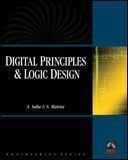
 | This text/reference provides students and practicing engineers with an introduction to the classical methods of designing electrical circuits, but incorporates modern logic design techniques used in the latest microprocessors, microcontrollers, microcomputers, and various LSI components. The book provides a review of the classical methods e.g., the basic concepts of Boolean algebra, combinational logic and sequential logic procedures, before engaging in the practical design approach and the use of computer-aided tools. The book is enriched with numerous examples (and their solutions), over 500 illustrations, and includes a CD-ROM with simulations, additional figures, and third party software to illustrate the concepts discussed in the book. |
 TABLE OF CONTENTS
 Digital Principles & Logic Design
Chapter 2 - Codes and Their Conversions
As we have discussed, digital circuits use binary signals but are required to handle data which may be alphabetic, numeric, or special characters. Hence the signals that are available in some other form other than binary have to be converted into suitable binary form before they can be processed further by digital circuits. This means that in whatever format the information may be available it must be converted into binary format. To achieve this, a process of coding is required where each letter, special character, or numeral is coded in a unique combination of 0s and 1s using a coding scheme known as code.
In digital systems a variety of codes are used to serve different purposes, such as data entry, arithmetic operation, error detection and correction, etc. Selection of a particular code depends on the requirement. Even in a single digital system a number of different codes may be used for different operations and it may even be necessary to convert data from one type of code to another. For conversion of data, code converter circuits are required, which will be discussed in due time.
Codes can be broadly classified into five groups, viz. (i) Weighted Binary Codes, (ii) Nonweighted Codes, (iii) Error-detection Codes, (iv) Error-correcting Codes, and (v) Alphanumeric Codes.
© 2006-2026 Infinity Science Press. All rights reserved.