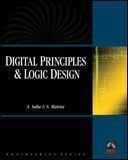
 | This text/reference provides students and practicing engineers with an introduction to the classical methods of designing electrical circuits, but incorporates modern logic design techniques used in the latest microprocessors, microcontrollers, microcomputers, and various LSI components. The book provides a review of the classical methods e.g., the basic concepts of Boolean algebra, combinational logic and sequential logic procedures, before engaging in the practical design approach and the use of computer-aided tools. The book is enriched with numerous examples (and their solutions), over 500 illustrations, and includes a CD-ROM with simulations, additional figures, and third party software to illustrate the concepts discussed in the book. |
 TABLE OF CONTENTS
 Digital Principles & Logic Design
Chapter 5 - Combinational Logic Circuits
The digital system consists of two types of circuits, namely
- (i) Combinational circuits and
- (ii) Sequential circuits
A combinational circuit consists of logic gates, where outputs are at any instant and are determined only by the present combination of inputs without regard to previous inputs or previous state of outputs. A combinational circuit performs a specific information-processing operation assigned logically by a set of Boolean functions. Sequential circuits contain logic gates as well as memory cells. Their outputs depend on the present inputs and also on the states of memory elements. Since the outputs of sequential circuits depend not only on the present inputs but also on past inputs, the circuit behavior must be specified by a time sequence of inputs and memory states. The sequential circuits will be discussed later in the chapter.
In the previous chapters we have discussed binary numbers, codes, Boolean algebra and simplification of Boolean function, logic gates, and economical gate implementation. Binary numbers and codes bear discrete quantities of information and the binary variables are the representation of electric voltages or some other signals. In this chapter, formulation and analysis of various systematic design of combinational circuits and application of information- processing hardware will be discussed.

Figure 5.1
A combinational circuit consists of input variables, logic gates, and output variables. The logic gates accept signals from inputs and output signals are generated according to the logic circuits employed in it. Binary information from the given data transforms to desired output data in this process. Both input and output are obviously the binary signals, i.e., both the input and output signals are of two possible states, logic 1 and logic 0. Figure 5.1 shows a block diagram of a combinational logic circuit. There are n number of input variables coming from an electric source and m number of output signals go to an external destination. The source and/or destination may consist of memory elements or sequential logic circuit or shift registers, located either in the vicinity of the combinational logic circuit or in a remote external location. But the external circuit does not interfere in the behavior of the combinational circuit.
For n number of input variables to a combinational circuit, 2n possible combinations of binary input states are possible. For each possible combination, there is one and only one possible output combination. A combinational logic circuit can be described by m Boolean functions and each output can be expressed in terms of n input variables.
© 2006-2026 Infinity Science Press. All rights reserved.