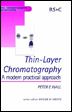
Thin-Layer Chromatography: A Modern Practical Approach
Chapter 4: Sample Application

1 Introduction

Adequate sample preparation and careful application of the sample to the TLC or HPTLC layer is imperative for good chromatographic separations. Frequently poor separations are blamed on the quality of the layer or the technique, rather than the way the sample was processed or applied to the sorbent surface. Without proper attention to detail incorrect sample solvents can easily be chosen resulting in large and/or irregular spot or band shapes for the sample application. Spot or band loadings on the chromatographic layer may also be too concentrated or of different sizes and strengths. Application devices such as pipettes, capillaries, etc. may damage the sorbent layer as spots or bands are applied. Band application may be uneven and vary in concentration along the band. It is also important that attention be given to the laboratory environment. A constant temperature and humidity should be maintained and the atmosphere kept relatively free of chemical fumes and solvent vapours. These may affect the sample or be adsorbed into the layer and alter the stationary mobile phase equilibrium later on during development. Any dust or dirt particles that may find their way onto the sorbent layer should be removed with a soft brush or dry air blower. Breathing on the layer should be avoided as moisture from this source can be adsorbed resulting in a change in the activity of the sorbent.

2 Selecting the Sample Solvent

The solvent used to apply the sample to the TLC plate can have a...

UNLIMITED FREE
ACCESS
TO THE WORLD'S BEST IDEAS

SUBMIT
Already a GlobalSpec user? Log in.

This is embarrasing...

An error occurred while processing the form. Please try again in a few minutes.

Customize Your GlobalSpec Experience

Category: Polymer Testing Equipment
Finish!
Privacy Policy

This is embarrasing...

An error occurred while processing the form. Please try again in a few minutes.