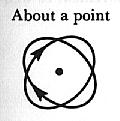
Relative movement between machine components and the constraints applied.
Constraint applied to the movement - About a Point
Continuous Movement
The movement will be rotation, and the arrangement can therefore make repeated use of accurate surfaces
Oscillating Movement If only an oscillatory movement is required, some additional arrangements can be used in which the geometric layout prevents continuous rotation.
Constraint applied to the movement - About a line
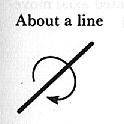
Continuous Movement
The movement will be rotation, and the arrangement can therefore make repeated use of accurate surfaces
Oscillating Movement If only an oscillatory movement is required, some additional arrangements can be used in which the geometric layout prevents continuous rotation.
Constraint applied to the movement - Along a line
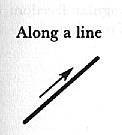
Continuous Movement
The movement will be translation. Therefore one surface must be long and continuous, and to be economically
attractive must be fairly cheap. The shorter, moving component must usually be supported on a fluid film or
rolling contact for an acceptable wear rate.
Oscillating Movement If the transitional movement is a reciprocation, the arrangement can make repeated use of accurate surfaces and more mechanisms become economically attractive.
Mechanical Engineering Design Topics Page
Pages created by David Price - 9/08/95
This Information is an educational resource and is not to be reproduced (other than for private study) without
written consent of the University of Southampton. copyright © Dave Whatley 1995
GlobalSpec.com is presenting this material with the consent of Dave Whatley.
Disclaimer Whilst every care has been taken to ensure the accuracy and completeness of this information, neither the author nor the University of Southampton will accept responsibility for loss, damage etc. however arising occasioned by the use of this information.