The Handbook of Hazardous Materials Spills Technology
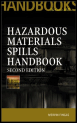
As an all-new update to the classic Hazmat reference book, this text addresses issues such as International law and regulations, risk assessment, biological effects, spill modeling, and more.
 TABLE OF CONTENTS
 Spill response often begins with actions intended to remove or stabilize a spill. The objective of these actions may be to prevent acute human health and environmental effects and/or to prevent further migration of the spilled material. After the situation stabilizes, long-term remediation may be necessary to restore the soil and groundwater to acceptable conditions.
The options for waste disposal typically depend on the characteristics of the waste, the governing laws and regulations, and the cost of disposal options. Time constraints, the availability of materials, labor, or equipment, and limits on the work area can also affect the choice of waste treatment or disposal.
This chapter describes options for the treatment and disposal of waste generated from the initial response actions. It also briefly describes some of the treatment or disposal options for long-term response.
The physical characteristics of a substance can determine how it moves through the environment after a spill (Chapter 11). The physical and chemical characteristics also determine the health and safety precautions that must be taken during spill cleanup (Chapters 8 and 10). Finally, those characteristics determine how a waste resulting from spill cleanup can be treated or disposed. The material safety data sheet (MSDS) provides fundamental information about the composition and characteristics of commercial products.
Depending on the waste classification, certain limitations...