The Handbook of Hazardous Materials Spills Technology
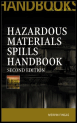
As an all-new update to the classic Hazmat reference book, this text addresses issues such as International law and regulations, risk assessment, biological effects, spill modeling, and more.
 TABLE OF CONTENTS
 The use of personal protective equipment is very important in spill situations because response personnel face exposure to chemicals that could cause serious injury or illness. The hazards are accentuated by the unknown physical environment of the spill site and the random nature of spills. The multiple hazards of spill sites distinguish such incidents from spills in the laboratory or exposure to chemicals in the workplace. Spill responders entering a site cannot always predict what chemicals or concentrations they will encounter and what other hazards may be present. There is also a lack of standards and guidelines for selecting and using personal protective equipment for chemical spill emergency situations. Most standards are written for use in the workplace and may not be fully applicable to emergency situations.
Preventing exposure to toxic chemicals is a primary concern at spill sites. Substances can enter the unprotected body by inhalation, ingestion, and skin absorption or permeation. Ingestion can occur by transferring absorbed contaminant during eating or smoking or by other forms of contact with the mouth. Some chemicals readily pass through the skin in a process known as permeation.
The most common types of protective equipment necessary for spill response are clothing and respirators. Totally encapsulated chemical protection suits (TECPS) or gas-tight suits are used when...