Improving Efficiency, Fourth Edition

Time is not always regarded as a separate resource because it is assumed to be part of the use of people. It is so important, however, that it is worth separate consideration here.
Sometimes, saving time can lead directly to increased efficiency. The rule is simple and fairly obvious: if you can perform a task more quickly without increasing your use of other resources, then you have improved efficiency. If this is not the case, then the saving in time must be balanced against any extra costs involved.
10 mins
1.
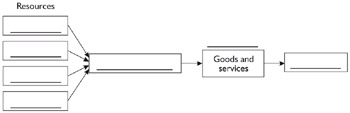
Complete the following diagram, by writing in the correct words:
2.
Place the following types of work organization in the most appropriate cells in the table:
A UK regional electricity company.
A UK water company.
A hairdresser.
A hardware shop.
A residential school.
A farm.
Transformation type
Sector
Manufacturing
Transport
Supply
Service
Improving
Caretaking
Transferring
3.
Complete the following statements by replacing the blanks with suitable words:
_______________ means making the best use of- to achieve production of goods or_______________
Work organizations__________________ resources (capital, materials and__________, with the help of ________________) into goods and services, which are provided to their____________________
_________________ can be defined as all the __________________and characteristics of a product or service that affect its ability to__________________ the needs of customers and_____________.
For information to be valid and reliable it must be____________________ and complete.
4.
Suggest two...