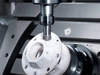
Advanced Ceramic Injection Molding Technology
Featured Product from 3X Ceramic Parts Company Limited

Ceramic Injection Molding (CIM) Overview
Ceramic Injection Molding (CIM) is a revolutionary process that uses injection molding technology to produce complex, high-precision ceramic components. Ideal for parts that are difficult to manufacture using traditional ceramic methods, CIM is highly efficient and cost-effective, making it a preferred solution in industries such as aerospace, automotive, medical, and electronics.
Key Features and Benefits of CIM:
- Precision Manufacturing: CIM enables the production of intricate designs with tight tolerances, offering parts with wall thicknesses as thin as 0.2 mm and feature dimensions as small as 0.1 mm.
- Efficiency and Sustainability: With lower material waste and energy consumption compared to traditional methods, CIM promotes environmental sustainability. The process allows for the reuse of raw materials, reducing overall waste.
- Material Flexibility: CIM can use various high-performance materials such as alumina, zirconia, and silicon carbide, providing high strength, wear resistance, and high-temperature resistance.
How CIM Works:
- Powder Mixture Preparation: The ceramic powder is mixed with a binder to form a moldable mixture.
- Injection: The mixture is injected into molds at high pressure, forming green components.
- Degreasing: The green components undergo degreasing to remove binders, leaving a porous structure.
- Sintering: The components are heated in a furnace to sinter the ceramic particles, creating a strong, dense structure.
- Finishing: After sintering, the parts are polished, coated, or machined to meet the required surface finish and dimensional accuracy.
Challenges:
- High Initial Investment: The required equipment and tools can be costly.
- Skilled Workforce: Operators need specialized skills to ensure consistent quality.
Despite these challenges, CIM proves more cost-effective in the long run, reducing labor costs and the need for secondary processes. Its ability to mass-produce precise components with minimal waste makes it a valuable choice for high-performance applications.