How IBC Enables Contact Temperature Sensing
Featured Product from Anderson Power Products

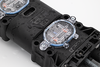
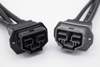
The DIN-compliant Anderson Power® Industrial Battery Connector series (IBC) helps ensure stable power transfer and prevent overheating. These benefits are enabled by contact temperature sensing capability, an accessory that enables equipment operators to monitor a connector’s contact temperature over time. This feature, the industry-exclusive Negative Temperature Coefficient (NTC) sensor, helps operators spot potential issues in their equipment. The IBC is the first DIN VDE 0623-589 connector to offer a patent-pending add-on accessory with an NTC sensor that works to prevent and monitor potential overheating. Spikes in contact temperatures while charging are effective warning signs for damaged, loose, or worn-out connectors.
Operators in material handling and other industries should take advantage of contact temperature sensing, especially if they use modern equipment with lithium-ion batteries. Electrification of forklifts and other equipment has become popular, but charging can be a difficult addition to a system on a tight schedule. Fast charging of Li-ion batteries is convenient in reducing downtime, but quick opportunity charging increases the current flow through the connector. This runs the risk of heating up the contacts more and causing damage. However, with the NTC sensor, operators can monitor their systems to ensure contacts are not overheating. The Temperature Sensing Application Guide can help operators understand the benefits of utilizing this feature and best practices to follow on implementation.
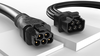
The IBC 80 is rated to support 55 to 220A, the IBC 160 supports 80 to 300A, and the IBC 320 supports 170 to 460A. Visit the Anderson Power website to explore this rugged power connector and learn more.