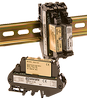
Galvanic Isolation and Dataforth
Featured Product from Dataforth Corporation
Galvanic Isolation: A Brief History and Modern Application
In today’s world of advanced electronics, the demand for batteries continues to grow rapidly. Battery technology has evolved dramatically over the past two centuries—ever since its origins in a rather unexpected experiment.
The story begins in 1780, when Italian physicist Luigi Galvani discovered that a frog’s leg would “twitch” when brass hooks attached to the muscle touched an iron plate. He described this as “animal electricity,” unknowingly setting the stage for the study of electrochemical energy.
Building on Galvani’s work, Alessandro Volta invented the first true battery in 1800. Using zinc and copper electrodes separated by saltwater, Volta’s invention marked the beginning of practical energy storage. A few decades later, in 1859, Gaston Planté developed the first rechargeable lead-acid battery—a technology that remains in use today.
Since those early milestones, battery development has accelerated. Key innovations include:
-
1889: D-size Zinc-Carbon battery
-
1899: Nickel-Cadmium battery
-
1959: Alkaline battery
-
1967: Lithium battery
-
1990: Nickel-Metal-Hydride (NiMH) battery
-
1999: Lithium-ion polymer battery
-
2004: Direct-Methanol Fuel Cell
Interestingly, the concept of a battery may date back even further. In 1936, archaeologists discovered a clay vessel from the Parthian period—over 2,000 years old—containing iron and copper rods. Believed to have been filled with vinegar as an electrolyte, this “Baghdad Battery” may have powered ancient electroplating processes.
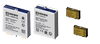
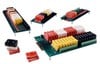
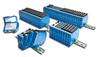
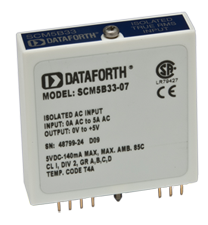
While batteries provide electrical isolation in circuits, galvanic isolation offers another powerful method to protect and separate signal paths. Dataforth’s signal conditioners are designed with true 3-way isolation—isolating the signal path, field circuit power, and system power from one another to ensure superior performance and safety.
In fact, Dataforth’s isolated signal conditioners are an excellent solution for battery measurement applications. Many customers use our SCM modules to measure individual battery cells, relying on their high common-mode rejection to protect sensitive monitoring and control equipment. The SCM5B40 family, for example, features an impressive 200 MΩ input resistance and 160 dB common-mode rejection ratio (CMRR).
If you’re working in battery or fuel cell design, manufacturing, or testing, Dataforth has the right signal conditioner to protect, amplify (or attenuate), isolate, and filter your critical measurement and control data.
Our Application Engineers are available to help you select the ideal solution.
?? Call us at 520-741-1404