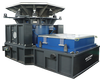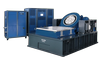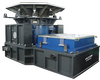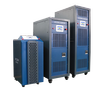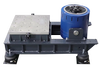
Long-Stroke 2500Hz EDM-LS Shaker System
Featured Product from ECON Technologies Co.,Ltd
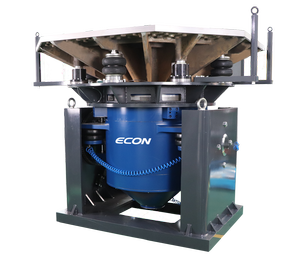
Modern transportation and aerospace products are increasingly exposed to low-frequency, high-displacement vibration environments, especially during logistics, handling, and shipment. Traditional vibration solutions—particularly hydraulic shakers—often face limitations in frequency range, control accuracy, and test repeatability when addressing these challenges.
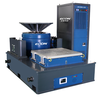
The EDM-LS Series Electrodynamic Vibration Test System is specifically engineered to meet long-stroke vibration testing requirements, combining large displacement capability with the inherent precision and bandwidth advantages of electrodynamic technology. With a frequency range of 1–2500 Hz, a maximum no-load acceleration of 800 m/s², and a maximum velocity of 1.8 m/s, the EDM-LS Series enables accurate simulation of real-world transportation and handling environments.
Designed for demanding industries such as aerospace and transportation, the EDM-LS Series supports long-stroke random, sine, and shock testing, making it well suited for compliance with ISTA, GB 4857, and GJB 150 transportation environment standards.
Key Capabilities
-
Long-Stroke Performance for Transportation Simulation
-
Optimized for large displacement vibration profiles
-
Ideal for packaging, logistics, and shipment validation tests
-
-
Wide Frequency Bandwidth
-
Frequency range from 1 to 2500 Hz
-
Covers low-frequency, high-displacement and mid-to-high frequency responses
-
-
High Dynamic Output
-
Maximum acceleration up to 800 m/s² (no-load)
-
Maximum velocity up to 1.8 m/s
-
Supports complex vibration profiles with high control accuracy
-
-
Multiple Test Modes Supported
-
Long-stroke random vibration
-
Long-stroke sine vibration
-
Long-stroke shock testing
-
-
Standards-Oriented Design
-
Suitable for ISTA transportation testing standards
-
Compliant with GB 4857 and GJB 150 environmental test requirements
-