LTV-247 Quad-Channel Phototransistor Optocoupler
Featured Product from ERSAELECTRONICS PTE. LTD.
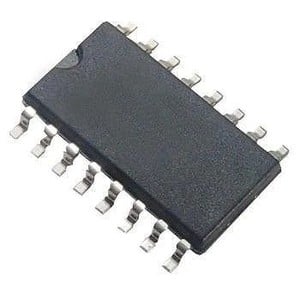
LTV-247 is designed for professional applications including isolated digital inputs, PLC interfaces, power-supply feedback, and industrial control boards, bringing the essential capabilities of a phototransistor optocoupler into one clearly defined orderable device. Engineers can use its channels (four phototransistor optocoupler channels), input (infrared LED per channel), and output (phototransistor) to judge functional fit, performance headroom, and system-level margins early in the design cycle. This parameter-led approach reduces the risk of selecting by family name alone and gives architecture, schematic, and component-review teams a common technical baseline.
During integration, the isolation (high-voltage galvanic isolation) and package (compact 16-pin multi-channel package) directly influence interface planning, PCB layout, power delivery, thermal design, and firmware configuration. Optical signal transfer creates a practical isolation barrier between control electronics and noisy or higher-potential field circuits. Engineering teams can identify package, timing, voltage, or resource constraints before prototype release and complete the required derating, compatibility, and environmental checks with fewer late-stage iterations. This reduces the schedule impact of board revisions, repeat qualification, and unresolved assumptions between hardware, firmware, test, and manufacturing teams.
For procurement, quality, and supply-chain teams, the use (logic isolation and level translation) and complete manufacturer part number provide the reference point for quotation and incoming inspection. Buyers can compare authorized-channel availability, packaging format, lot consistency, lifecycle status, and alternate-part risk while requesting appropriate traceability and quality records. Reviewing technical fit and commercial supply conditions together helps control shortages, ordering errors, and non-equivalent substitutions without weakening the original design requirements.
Key Specifications
- Channels: four phototransistor optocoupler channels
- Input: infrared LED per channel
- Output: phototransistor
- Isolation: high-voltage galvanic isolation
- Package: compact 16-pin multi-channel package
- Use: logic isolation and level translation
How It Helps Engineering and Procurement Teams
- Safer signal partitioning: Galvanic isolation helps protect low-voltage control domains from field-side disturbances.
- Lower channel count risk: Defined channel and package details simplify schematic and footprint checks.
- Stable interface planning: CTR and insulation data support input-drive and output-pull-up calculations.
- Simpler procurement: A precise CTR grade and package code prevents substitutions with different transfer behavior.
Value for Professional Buyers and Supply Teams
- Accurate quotation: Use the complete LTV-247 order code so package, grade, density, and packing suffixes are not lost.
- Alternate control: Require a line-by-line comparison of pinout, electrical limits, dynamic performance, and qualification before accepting a substitute.
- Quality and traceability: Match label, lot, traceability, and inspection-document requirements to the risk level of the project.
- Supply planning: Plan purchases around demand quantity, standard pack, lead time, lifecycle position, and appropriate safety stock.
Typical Applications
- Isolated Digital Inputs: In isolated digital inputs, LTV-247 provides galvanic isolation between control electronics and electrically noisy field circuits, giving engineering teams measurable design and test targets.
- Plc Interfaces: In PLC interfaces, LTV-247 provides galvanic isolation between control electronics and electrically noisy field circuits, giving engineering teams measurable design and test targets.
- Power-Supply Feedback: In power-supply feedback, LTV-247 provides galvanic isolation between control electronics and electrically noisy field circuits, giving engineering teams measurable design and test targets.
- Industrial Control Boards: In industrial control boards, LTV-247 provides galvanic isolation between control electronics and electrically noisy field circuits, giving engineering teams measurable design and test targets.
Design Review Checklist
- Functional fit: Confirm that the channels (four phototransistor optocoupler channels) matches the actual system function and load conditions.
- Electrical margin: Use the input (infrared LED per channel) and output (phototransistor) to check ratings, derating, and worst-case operation.
- System integration: Verify that the isolation (high-voltage galvanic isolation) meets interface, timing, supply, or control-resource requirements.
- Mechanical and manufacturing fit: Confirm that the package (compact 16-pin multi-channel package) is compatible with the PCB footprint, PCB assembly process, and available space.
- Environment and supply: Review the use (logic isolation and level translation), temperature grade, packaging, lifecycle, and traceability documentation.
Selection and Sourcing Considerations
Before release, verify the complete part number, use (logic isolation and level translation), pack quantity, temperature grade, and lifecycle status against the latest manufacturer documentation. Confirm any required RoHS, REACH, AEC-Q, PPAP, or industry-specific compliance records and make sure the supplier can provide manufacturer traceability. For alternates, compare pinout, package dimensions, absolute ratings, key dynamic behavior, software impact, and qualification requirements; a family name or shortened code alone does not establish drop-in compatibility.