What Is Solder Flux and How to Use It
Featured Product from ODG (Origin Data Global)
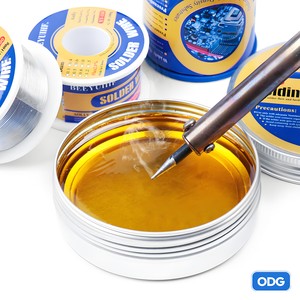
Ever tried soldering a wire only to watch the solder ball up like mercury? That’s where flux steps in—the unsung hero of metal bonding. Think of it as a backstage crew that preps surfaces before the main act (solder) takes the spotlight. Whether you are fixing a headphone jack or sealing a leaky pipe, flux helps remove hidden dirt. This dirt includes oxides and oils that can disrupt smooth connections.
This guide breaks down flux types for real-world jobs, from smartphone fixes to heavy-duty plumbing. You will learn why rosin is great for circuit boards but not for copper pipes. You will also see when "no-clean" flux saves time and still works well. Skip the textbook jargon—we’re talking brass tacks from the workbench.
What Is Solder Flux
In electronics soldering and plumbing repairs, solder flux acts as an invisible technical assistant. What is flux in solder? It's a crucial component in the soldering process. When you notice solder struggling to adhere evenly or oxidation darkening metal joints, this "metal cleaner" steps into action.
Metal surfaces may appear smooth, but are often coated with oxide layers. For instance, copper exposed to air forms a CuO layer—like an invisible armor. What does solder flux do? Flux contains organic acids that gently dissolve these barriers, operating with more precision than everyday descaling agents like citric acid. Oxidation accelerates when metals heat up. Aluminum, for example, oxidizes many times faster at 300°C. Flux creates a liquid shield akin to a non-stick coating on a frying pan, minimizing oxygen exposure.
What is flux solder? Without flux, molten solder behaves like cooled honey—its surface tension causes poor spreading. Flux reduces surface tension, allowing solder to flow like water across joints.
Key Flux Formulations
-
Base Material: Rosin resin, derived from pine sap, offers eco-friendliness and thermal stability.
-
Activators: Amine compounds act as "oxidization busters," working synergistically with acids.
-
Solvents: Isopropyl alcohol adjusts viscosity for precise application.
-
Thickeners: Silica micro powder ensures flux stays in place during soldering.
Types of Solder Flux
Soldering requires different flux formulations to handle various metal types and project requirements. These chemical agents work behind the scenes to ensure strong, clean connections by removing oxidation and improving solder flow. How to solder with flux? Let's explore common flux categories used across industries.
Rosin-Based Flux
Derived from pine tree resin, this traditional formula creates a protective layer during heating while dissolving surface oxides. Its mild acidity makes it suitable for delicate electronics like circuit boards and relay terminals. How to use flux solder? After soldering, residues typically require alcohol cleaning to prevent conductivity issues in high-precision applications.
Water-Soluble Flux
Containing organic acids, this eco-friendly option works well for plumbing joints or automotive repairs. Unlike rosin variants, it dissolves completely in water post-soldering. Users should thoroughly rinse surfaces to avoid corrosive residue buildup, especially in humid environments.
No-Clean Flux
A modern solution for quick repairs and consumer electronics assembly. Its low-residue formula eliminates post-soldering cleanup but works best in controlled environments with stable temperatures. The inactive residues don't conduct electricity, making them ideal for smartphone circuit boards.
Resin-Activated Flux
Combining natural resins with mild activators, this type balances cleaning power with minimal corrosion risk. Frequently used in industrial equipment maintenance, simple alcohol wiping is required after application. Some formulations meet aerospace standards for reliability.
Specialized Fluxes
Certain projects demand tailored formulas:
-
Silver Soldering Flux handles jewelry-making and precious metal work through high-temperature stability
-
Inorganic Acid Flux tackles heavy oxidation on plumbing pipes but requires strict safety precautions
-
Low-solid flux minimizes residue in medical device manufacturing where cleanliness is critical
Each flux type serves distinct purposes based on its chemical behavior and cleaning requirements. Electronics technicians often keep multiple variants on hand—rosin for circuit boards and water-soluble for mechanical joints demonstrate practical versatility. Proper selection prevents common soldering failures like cold joints or component corrosion.
| Flux Type | Best For | Cleanup Needed | Key Notes |
| Rosin-based | Circuit boards, relays | Alcohol wipe | Old-school choice; gentle on thin wires |
| Water-soluble | Plumbing pipes, car parts | Water rinse | Eco-friendly but needs drying |
| No-clean | Phones, quick fixes | None | Avoid damp areas |
| Resin-activated | Factory machines | Quick alcohol | Less smoke than pure rosin |
| Silver Soldering | Jewelry, art pieces | Special solution | Handles high heat for precious metals |
How to Use Solder Flux
Using flux isn't rocket science, but doing it wrong can ruin your project. Let's walk through the basics I've learned from fixing countless electronics and plumbing joints.
Prep Work Matters
Start with clean metal—no shortcuts here. Scrub surfaces with sandpaper or a wire brush until they shine. I once tried soldering a battery terminal without cleaning; the solder beaded up like water on a waxed car. Lesson learned: flux can't fight through grease or rust. Wipe down with alcohol if you're dealing with old parts.
Choosing Your Flux
Match the flux type to your job:
-
Grab rosin flux for circuit boards—it's gentle on thin wires.
-
Water-soluble works for copper pipes, but rinse like your paycheck depends on it.
-
No-clean your friend for quick phone repairs—just don't breathe in the fumes.
Application Tricks
Don't drown the joint. Use a brush or flux pen to spread a thin layer—think pancake batter consistency. You can keep cotton swabs in your toolkit for hard-to-reach spots. Pro tip: warm the flux bottle in your pocket during winter; thick flux won't spread right when cold.
Heat Control
Here's where beginners mess up. Apply heat to the metal, NOT the flux. Watch the flux bubble and turn clear—that's your cue to feed in the solder. If it smells like burnt toast, you're too hot. Ease off the heat, let it cool for 10 seconds, then retry.
Cleanup Routine
-
Rosin flux? Swab with isopropyl alcohol—cheap vodka works in a pinch.
-
Water-soluble needs a good rinse and dry towel pat-down.
-
No-clean variants leave sticky spots—hit them with a dry toothbrush if needed.
Safety Bits
Open a window, even if using "safe" flux. That pine smell gets headache-inducing after hours. Store flux away from kids and heat sources.
When Things Go Wrong
-
Snotty-looking joints? Probably used expired flux.
-
Solder not flowing? Reapply flux—it burns off during heating.
-
Corrosion later? You skipped post-soldering cleaning.
Flux is like garlic in cooking—too little fails, too much ruins everything. Start with pea-sized amounts and adjust. With practice, you'll develop a feel for how much different metals need.
Conclusion
Flux remains the silent hero in every successful soldering job. Whether you're fixing a smartphone board or sealing copper pipes, choosing the right flux type makes the difference between a shiny joint and a failed connection. Remember:
-
Clean surfaces before flux application (scrub till shiny, no shortcuts)
-
Match flux strength to oxidation levels (delicate electronics ≠ heavy plumbing jobs)
-
Post-soldering cleanup matters (alcohol for rosin, water for soluble types)
Why ODG Stands Out
From mission-critical ICs to connectors anchoring industrial systems, ODG streamlines BOM sourcing like a multimeter zeroing in on true value. Here’s why engineers trust us as their silicon sherpa:
-
No counterfeit compromises
-
Global Reach, Local Speed
-
BOM Lifeguards — Our engineers cross-check component obsolescence risks and alternates
ODG: Where every IC is a checkpoint, not a gamble. More than a distributor. We’re the impedance matching your ambition to reality.