Exploring Transducers: Basics and Classifications
Featured Product from Quarktwin Technology Ltd.
Have you ever wondered how your smartphone's touchscreen magically transforms your taps and swipes into actions? Or how medical professionals can peer inside the body using ultrasound? Behind these everyday conveniences is a common component, known as a transducer, that seamlessly transforms one type of energy into another—making interaction with our technology more intuitive and responsive. Though not often in the spotlight, these components are crucial in bridging the gap between different forms of physical phenomena and the electronic systems that process them.
In this article, we will discuss the basics of transducers, how they are classified, the characteristics of transducers, and the countless applications where they play an important role.
What is a Transducer?
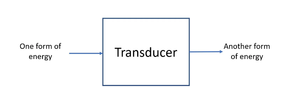
A transducer is an electronic device or system that converts one form of energy into another for various purposes such as measurement, data transfer, or information processing. This process of conversion is governed by the principle of energy transduction.
They are widely used in various fields of engineering and technology. For instance, in electronics and signal processing, piezoelectric crystals can serve as transducers by converting mechanical stress into an electrical signal.
In the context of acoustics, a microphone acts as a transducer by converting sound waves into an electrical signal, while a loudspeaker acts as a transducer oppositely, transforming electrical signals into sound waves.
Parts of TransducersSensing Element
The sensing element, often referred to as the primary sensor, is the core component of the transducer responsible for detecting and responding to the physical quantity or stimulus it is designed to measure. The nature of the sensing element varies according to the type of transducer and the physical quantity it measures.
For instance, in a temperature transducer, the sensing element might be a thermocouple or a resistance temperature detector (RTD).
Transduction Element
The transduction element of a transducer is responsible for converting the input energy from the sensing element into a different form. This conversion is essential for the measurement or monitoring system to interpret the physical stimulus.
Common transduction mechanisms include the piezoelectric effect for pressure transducers or the thermoelectric effect for temperature transducers.
Signal Processing Circuitry
The electrical components of a transducer refer to the circuitry that processes the signal from the transduction element. This typically includes amplifiers to boost the signal strength, filters to remove noise, and analog-to-digital converters for digitizing analog signals if the system requires a digital output.
Output Interface
The stage where the processed signal is either displayed or transmitted for further analysis or action, ranging from a simple needle gauge to complex digital interfaces.
Apart from these main elements, the parts mentioned below may also be included:
Calibration Mechanisms
Most transducers require calibration to ensure the accuracy and reliability of their measurements. Calibration mechanisms might include adjustable resistors, software calibration routines, or reference comparison techniques that are used to align the transducer's output with known standards.
Feedback Components
In certain types of transducers, feedback components are incorporated to create a closed-loop system that allows the transducer to adjust based on the output, providing real-time corrections.
This could be especially important in maintaining the fidelity of the system or adapting to dynamic changes in the environment or stimulus being measured.
Classification of Transducers
Transducers are classified into various types based on different attributes, including the type of energy conversion, the principle of operation, and the type of output signal they produce.
-
Transducers based on Transduction medium
-
Active and Passive Transducers
-
Primary and Secondary Transducers
-
Analog & Digital Transducers
-
Input and Output Transducers
Transducers based on Transduction Medium
When we focus on the medium of transduction, it relates to the electrical characteristic the transducer uses to convert the input (which is often a physical phenomenon like pressure, temperature, proximity, etc.) into an electrical signal.
The transduction medium may be Resistive, Inductive, and capacitive.
Resistive Transducers
Resistive transducers operate based on a change in electrical resistance. An example of a resistive transducer is a photoresistor which changes its resistance in response to variations in light intensity. This property is employed in light-sensitive applications, such as automatic streetlights or camera exposure controls.
Capacitive transducers
Capacitive transducers function based on variations in capacitance, typically occurring due to changes in the distance between the plates of a capacitor or a change in the dielectric material.
One example of the capacitive transducer is touch screen technology used in smartphones and tablets. Capacitive touchscreens use the capacitance changes caused by the electrical properties of the user's finger to detect and respond to touch inputs.
Inductive transducers
Inductive transducers, on the other hand, work on the principle of inductance change caused by the movement of a magnetic core or changes in the coil parameters, positioning, or the mutual inductance between coils.
LVDT is an example of an inductive transducer.
Active and Passive Transducers
There are two types of transducers based on the nature of transducers.
Active Transducers
Active transducers are also known as Self-generating transducers. They generate electrical output signals without the need for an external power source.
A common example is a thermocouple, which generates a voltage correlating to temperature differences between two dissimilar metals.
Passive Transducers
These require an external power supply to operate. Resistive, inductive, and capacitive sensors fall under this category. An example is a strain gauge, which alters its electrical resistance with applied force.
Primary and Secondary Transducers
Based on the role or stage in the process of measurement, transducers are classified as:
Primary Transducers
These directly convert physical quantities into a mechanical signal. An example of a primary transducer is a bourdon tube, which transforms pneumatic or hydraulic pressure into a mechanical displacement.
Secondary Transducers
These convert the mechanical signal from a primary transducer into an electrical signal. For instance, LVDT converts input(displacement) from the bourdon tube into electrical quantity.
Analog & Digital Transducers
Based on the type of Output Signal, transducers are of two types:
Analog Transducers
These transducers produce an analog output signal that varies continuously with the measured physical quantity. A Linear variable differential transformer (LVDT), strain gauge, and thermistor are typical analog transducers.
Digital Transducers
These produce a digital output, often in the form of a pulse or a digital signal that corresponds to the measured quantity. An example is a rotary encoder, which outputs digital pulses corresponding to the rotational position of a shaft.
Input & Output Transducers
Based on the Direction of Energy Conversion, transducers are classified as:
Input Transducers
Also known as sensors, input transducers are devices that convert a form of physical energy into an electrical signal. This category of transducers is primarily used to sense environmental changes or conditions, such as temperature, pressure, light, sound, or motion.
Output Transducers
Often referred to as actuators, output transducers operate in the reverse direction to input transducers. These devices accept an electrical signal and convert it into a form of physical energy to produce movement, force, or some variation in the physical environment.
For example, an electric motor takes electrical energy and converts it into mechanical torque, and a speaker transforms electrical signals into sound waves.
Characteristics of Transducers
When it comes to the characteristics of transducers, we can classify them into two categories:
-
Static
-
Dynamic
Static characteristics refer to the behavior of a transducer when it is in a steady-state condition. These characteristics include sensitivity, linearity, accuracy, repeatability, and hysteresis.
Dynamic characteristics describe the behavior of a transducer when it is subjected to changes in input variables over time. These characteristics include response time, bandwidth, frequency response, and resonance frequency.
Understanding both static and dynamic characteristics of transducers is crucial for selecting and using them effectively in various applications. These characteristics are pivotal parameters in the design and application of transducers.
Applications of Transducers
- Medical Imaging
-
Convert ultrasound waves into images for diagnostics.
-
Transform MRI signals into detailed body scans
-
Transduce electrical signals from ECGs into heart rhythm traces.
- Audio Technology
-
Turn vibrations into electrical signals in microphones.
-
Reproduce sounds from electrical signals in speakers.
- Industrial Sensors
-
Measure pressure changes in pipes and tanks.
-
Detect temperature variations for process control.
-
Convert chemical sensor readings into safety alarms.
- Telecommunications
-
Convert voice into electronic signals for transmission.
-
Modulate laser light for fiber-optic data transfer.
- Environmental Monitoring
-
Track weather patterns using radar reflections.
-
Monitor river levels with hydrostatic pressure transducers.
Conclusion
Transducers play an important role in the interfacing of electronic systems with the environment, acting as bridges between the physical and electronic domains. This article decoded the world of transducers discussing what is a transducer, how transducers work, transducers types, and characteristics of transducers and concluded by shedding light on their so many applications.
Check the variety of sensors and transducers available on our website.