
Electric Hydraulic Pressure Regulators
Description
Electric hydraulic pressure regulators are devices designed to maintain a constant output pressure within a hydraulic system, even when there are fluctuations in the incoming pressure. These regulators are equipped with electronic controls that allow for precise adjustments to the output pressure, ensuring stability and consistency in the system's operation.
Working Principle
Electric hydraulic pressure regulators operate by using a combination of electronic controls and mechanical components to manage pressure levels. They incorporate a fill valve and a vent valve to maintain the desired outlet pressure. An internal pressure sensor continuously monitors the output pressure, and a digital controller adjusts the flow through the internal valves to keep the pressure at the set-point. This closed-loop control system allows the regulator to respond in real-time to changes in flow rates, ensuring that the output pressure remains constant. The use of electronic controls provides a significant advantage over mechanical regulators, as it allows for more precise and reliable pressure regulation.
Applications
Electric hydraulic pressure regulators are used in a variety of applications where precise pressure control is critical. Specific examples include high-tech manufacturing processes, where maintaining consistent pressure is essential for product quality, and in hydraulic systems used in aerospace and automotive industries, where precise pressure control can impact performance and safety.
Advantages over other Hydraulic Pressure Regulators
Electric hydraulic pressure regulators offer several advantages over traditional mechanical regulators. They provide more precise control of the output pressure due to their electronic feedback systems, which can make real-time adjustments. This precision is particularly beneficial in applications requiring tight pressure tolerances. Additionally, the ability to adjust the pressure settings electronically allows for greater flexibility and adaptability in dynamic environments.
Limitations
One limitation of electric hydraulic pressure regulators is their reliance on electronic components, which can be susceptible to failure in harsh environments. Additionally, these regulators may require a power source to operate, which can be a constraint in remote or off-grid applications. The complexity of the electronic systems can also lead to higher initial costs and may require specialized knowledge for maintenance and troubleshooting.
Considerations
When selecting an electric hydraulic pressure regulator, several factors should be considered. Initial costs can be higher compared to mechanical regulators due to the complexity of the electronic components. Operating expenses may also be influenced by the need for a continuous power supply. Durability is a key consideration, as the electronic components must be protected from environmental factors that could cause damage. Accuracy is a significant advantage of these regulators, but it is essential to ensure that the system is properly calibrated and maintained to achieve the desired performance. Replacement and maintenance costs should also be factored into the decision-making process, as specialized components and expertise may be required.

from HydraForce, Inc.
A screw-in, cartridge-style, fixed orifice, pressure compensated, hydraulic flow regulating valve (restrictive type) for operation up to 345 bar (5000 psi). [See More]
- Actuation: Electric
- Number of Ports: 2
- Maximum Pressure: 5000.00
- Media Temperature: -15 to 400
from co-ax valves inc.
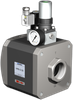
Function: pressure balanced pressure limitation valve, externally controlled or direct acting. Media: gaseous, liquid, highly viscous, contaminated. Body Materials: brass, aluminum, stainless steel, galvanized steel. Options: SAE connection, safety valve, mounting, special voltage, coil M 12 x 1,... [See More]
- Actuation: Electric; ElectroPneumatic; Pilot; Pneumatic
- Controlled Pressure Range: 72.52 to 928.24
- Regulator Size: 1.97
- Maximum Pressure: 72.52 to 928.24

from HydraForce, Inc.
A screw-in, cartridge-style, adjustable, pressure-compensated, restrictive-type hydraulic flow regulating valve. [See More]
- Actuation: Electric
- Number of Ports: 2
- Maximum Pressure: 5000.00
- Media Temperature: -15 to 400

from HydraForce, Inc.
A screw-in, cartridge-style, multi-function valve which includes a fixed-compensated, priority-type flow regulator and an adjustable pressure relief valve in one cartridge. [See More]
- Actuation: Electric
- Number of Ports: 4
- Maximum Pressure: 3000.00
- Media Temperature: -15 to 400