
Ink Temperature Indicating Coatings and Materials
Last Updated: April 1, 2025
Description
Ink Temperature Indicating Coatings and Materials are specialized inks that change color in response to temperature variations. These inks are designed to provide a visual indication of temperature changes, allowing users to monitor and assess temperature conditions effectively.
Working Principle
The working principle of Ink Temperature Indicating Coatings and Materials involves the use of thermochromic inks, which contain microencapsulated leuco dye or thermochromic liquid crystals. These components react to temperature changes by altering their molecular structure, resulting in a visible color change. This color change provides a clear and immediate indication of temperature fluctuations, making these inks useful for monitoring and controlling temperature-sensitive processes.
Applications
Ink Temperature Indicating Coatings and Materials have a wide range of applications across various industries. In the electronics industry, they are used to measure surface temperatures on printed circuit boards (PCBs) to ensure optimal performance and prevent overheating. In the food and beverage industry, these inks help monitor the temperature of products to ensure they have reached the desired temperature for safety and quality control. Additionally, they are used in the automotive industry to monitor engine and valve operations for warranty protection and in the medical field for temperature-sensitive equipment.
Advantages over other Temperature Indicating Coatings and Materials
One of the key advantages of Ink Temperature Indicating Coatings and Materials is their ability to provide a clear and immediate visual indication of temperature changes. This feature makes them particularly useful in applications where quick and accurate temperature assessment is critical. Unlike other temperature indicating materials, these inks can be applied to a variety of substrates, including paper, plastics, glass, wood, and textiles, offering versatility in their use.
Limitations
A significant limitation of Ink Temperature Indicating Coatings and Materials is their susceptibility to environmental factors. Extreme temperatures, UV light, and strong solvents can rapidly deteriorate their life expectancy, affecting their performance and reliability over time.
Considerations
When considering the use of Ink Temperature Indicating Coatings and Materials, it is important to evaluate factors such as initial costs, operating expenses, durability, accuracy, and replacement and maintenance costs. While these inks offer the advantage of immediate visual feedback, their durability can be compromised by environmental conditions, potentially leading to increased maintenance and replacement costs. Additionally, the accuracy of temperature indication may vary depending on the specific formulation and application method used.
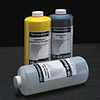
from Videojet Technologies, Inc.
Videojet inks and fluids are designed, tested and manufactured together, to function together at optimum performance levels, no matter what your application or production environment. [See More]
- Type: Ink; Marking Material
- Industry: Electronics (optional feature); Food / Beverage (optional feature); Medical (optional feature); Mil-Spec (optional feature); OEM / Industrial (optional feature); Semiconductor (optional feature)
- Features: Heat Resistant (optional feature)
from LCR Hallcrest
ThermostripTM DC is a highly accurate heat indicator designed for use within a drying, curing, laminating or bonding process. The individual strip has 5 temperature settings that when exposed to heat will permanently change color from silver to black Indicating attained temperature. Attach to the... [See More]
- Type: Ink
- Features: Reversible
- Activation Temperature: 59 to 117
- Industry: OEM / Industrial