
Google® Notebook and Laptop Computers
Last Updated: February 12, 2025
Description
Google® Notebook and Laptop Computers are portable computing devices designed to offer a wide range of functionalities similar to desktop computers. They are equipped with various hardware components such as processors, memory, storage, and display units, all integrated into a compact, foldable design. These devices are intended for general-purpose personal computing, providing users with the ability to perform tasks such as document creation, media access, and gaming.
Working Principle
Notebook and laptop computers operate by integrating multiple components into a single unit, allowing for mobile use. They utilize semiconductors and integrated circuits to perform computations and process data. The devices are powered by microprocessors that execute instructions and manage the flow of information between the hardware and software components. This integration makes them useful for tasks that require mobility, as they can be easily transported and used in various locations without the need for external peripherals.
Applications
Notebook and laptop computers are used in a variety of applications. For example, they are commonly employed in field data acquisition, where their portability allows users to collect and analyze data on-site. They are also used in educational settings for tasks such as note-taking and research, as well as in business environments for presentations and remote work.
Advantages over other Notebook and Laptop Computers
One of the advantages of Google® Notebook and Laptop Computers is their ability to provide desktop-like performance in a portable form factor. This makes them suitable for users who require high computational power while on the move. Additionally, their integration of all components into a single unit simplifies transportation and setup, offering convenience over traditional desktop systems.
Limitations
A limitation of notebook and laptop computers is their susceptibility to environmental factors. Since all components are housed together, exposure to dust or moisture can potentially damage the device. Furthermore, they may not offer the same level of processing power or expandability as high-end desktop computers, which can be a drawback for users with demanding computational needs.
Considerations
When considering the purchase of a notebook or laptop computer, factors such as initial cost, operating expenses, and durability should be taken into account. These devices can range in price, with some models being more affordable but offering less processing power. Operating expenses may include the cost of software and potential repairs. Durability is also a key consideration, as the compact design can make them more prone to damage from drops or impacts. Additionally, users should consider the accuracy and reliability of the device for their specific needs, as well as the potential costs associated with replacement and maintenance.

from Lenovo
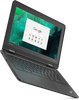
Versatile and ultraportable, the Flex 11 is a 2-in-1 Chromebook fusing the fun of a tablet with the punch of a PC. This speedy Chromebook is powered by an ARM processor built for seamlessly running apps from the Google Play Store*. What's more, its 360° hinge allow users the flexibility to shift... [See More]
- Operating System: Google®
- Speed: 2100
- Processor: MTK
- Main Memory: 4.00
from Lenovo
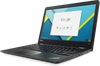
As lightweight as just 3.3 pounds, with rubberized bumpers, reinforced ports / hinges, and drop-resistance, the ThinkPad 11e is engineered to withstand the rigors of the classroom. It's perfect for on-the-go learning and either one-to-one or shared computing. Students and teachers enjoy access to... [See More]
- Operating System: Google®
- Main Memory: 4.00
- Processor: Intel 386 Family
- IDE Capacity: 32.0
from Lenovo
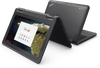
From boardrooms to business class, the ThinkPad 13 Chromebook handles any job. Thin and light, this 13.3" device easily slips into a bag and runs all day on a single charge. Plus, it's enterprise-ready with commercial-grade quality and features such as powerful Intel® processors, access to thousands... [See More]
- Operating System: Google®
- Speed: 1600 to 3000
- Processor: Intel 386 Family
- Main Memory: 8.00
from Lenovo
With its extra-durable design, this 2-in-1 ThinkPad 11e Chromebook is engineered to withstand the rigors of the classroom. A flexible 360-degree hinge and 10-point multitouch display accommodates just about any work style. The lightweight portability of just 3.5 pounds makes the Yoga 11e perfect for... [See More]
- Operating System: Google®
- Main Memory: 4.00
- Processor: Intel 386 Family
- IDE Capacity: 32.0