
United States Only Cladding and Hardfacing Services
Last Updated: February 12, 2025
Description
Cladding and hardfacing services involve the application of a protective layer onto a base metal to enhance its properties. Cladding typically involves metallurgically bonding a different material to the base metal, often through rolling or high-pressure processes. Hardfacing, on the other hand, involves welding materials with different properties onto the substrate to improve its surface characteristics. These services are used to impart greater abrasion and erosion resistance, as well as anti-fouling, anti-slip, and corrosion-resistant properties to the base material .
Working Principle
Cladding works by metallurgically bonding a different material to a base metal, which is usually less costly but also less resistant to corrosion or wear. This process can be achieved through methods such as rolling or high-pressure bonding. Hardfacing involves welding a harder material onto the surface of a base metal to improve its wear and corrosion resistance. Common techniques for hardfacing include arc welding and torch welding. These processes are useful because they enhance the durability and longevity of the base material by providing a protective layer that withstands harsh conditions .
Applications
Cladding and hardfacing services are widely used in industries where enhanced surface properties are critical. For example, cladding is used in the chemical industry to produce reactor pressure vessels with internal corrosion protection by applying stainless material to lower alloy steel. Hardfacing is commonly applied to the cutting edges of earth-moving machinery to improve wear resistance. These services are also employed in manufacturing environments where components are exposed to abrasive or corrosive conditions .
Advantages over other Cladding and Hardfacing Services
One advantage of using cladding and hardfacing services is the ability to select overlay materials that specifically enhance the base material's physical, electrical, and thermal properties. For instance, cladding can provide a corrosion-resistant layer without significantly altering the base material's structural integrity. Hardfacing allows for the repair and rebuilding of surfaces, extending the life of machinery and reducing the need for complete part replacements .
Limitations
A limitation of cladding and hardfacing services is the potential for increased costs due to the need for specialized materials and processes. Additionally, the effectiveness of these services can be limited by the compatibility of the overlay material with the base metal, which may require careful selection and testing to ensure optimal performance .
Considerations
When considering cladding and hardfacing services, it is important to evaluate initial costs, which can be high due to the specialized materials and processes involved. Operating expenses may also increase if frequent maintenance or replacement of the protective layer is required. Durability and accuracy of the applied layer are crucial factors, as they determine the longevity and effectiveness of the protection. Replacement and maintenance costs should be factored into the overall cost-benefit analysis to ensure that the investment in cladding and hardfacing services is justified .
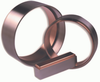
from Qnnect, formerly Hermetic Solutions Group
Design engineers are often faced with the dilemma of material selection, and frequently, they find that a combination of materials provides the optimal properties required by the design. PA &E's explosive bonding process can join otherwise incompatible materials without compromising other design... [See More]
- Company Information: PA&E has helped customers to achieve the "impossible" for more than 30 years with its innovative metal-to-ceramic, metal-to-composite, and metal-to-metal bonding solutions.
- Cladding / Overlay Material: Aluminum; Braze; Carbide / Hardmetal; Composite; Copper; Nickel; Precious Metal (Gold, Silver); Refractory Metal; Solder; Steel - Stainless; Steel - Structural; Steel - Tool; Titanium
- Surfacing Process: Specialty / Other; Explosive Bonding; Hardening / Heat Treatment; Explosive Metal Hardening
- Function / Performance: Abrasion Resistant; Blast Mitigation; Conductive; Corrosion / Rust Preventive; Heat Resistant; Impact Resistant; Magnetic; Non-magnetic; Wear Resistant; Magnetic Radiation Shielding

from Synertech PM Inc.
The leader in development and manufacturing of Powdered Metal Products via Hot Isostatic Pressing. Synertech P/M, Inc. has the technical expertise in PM and HIP to research, develop and produse the highest quality products in a cost effective and timely manner. Synertech P/M, Inc. was established to... [See More]
- Company Information: Synertech P/M is the leader in development and manufacturing of Powdered Metal Products via Hot Isostatic Pressing. They produce the highest quality products to your specifications, in a cost effective and timely manner.
- Cladding / Overlay Material: Carbide / Hardmetal; Copper; Nickel; Refractory Metal; Steel - Stainless; Steel - Structural; Steel - Tool; Titanium
- Surfacing Process: Diffusion Bonding; Hardfacing