Rubber Bonding Services Information
Rubber bonding services produce rubber-to-metal, rubber-to-rubber, and elastomer-to-metal heterogeneous materials using molding and adhesive technologies.
Many kinds of polymers are used to make rubbers. Similarly, rubber bonding can employ natural rubber, or one of the many types of synthetic rubber, such as neoprene, EPDM, and nitrile. Each variety offers unique characteristics, which may include resistances to extreme temperatures, water, wear, and certain chemicals. The strengths and weaknesses of a particular kind of rubber should be considered when selecting a rubber for bonding processes.
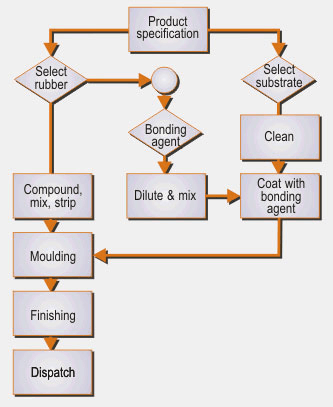 Common rubber-to-metal bonding involves a variety of metallic substances, depending on the application. Steel and steel alloys, brass, copper, beryllium, and titanium are all utilized. Aluminum bonding is the most common because of its ductility, strength, and light weight, as well as the economical trait of being cheaper than other metals. Fabric and rubber are bonded together for applications including vehicle tires, inflatable rubber dams, and covers for pools and other outdoor objects that need protection. Glass and fabric are also bonded together sometimes, creating precision medical supplies such as vacuum massagers.
Bonded rubber production is dependent upon the material with which it is being fused. All rubber-to-metal products go through the same basic process. A metallic substance is selected, cleaned, shaped, and placed into a mold that is only slightly larger than the part itself. The metal substrate is kept steady in the mold while it is covered in molten rubber, which is a precise and monotonous process. Once the rubber is hardened, the mold is removed and the rubber and metal bond is complete.
Rubber-bonded components and products are common used to isolate vibration and noise in certain applications. The automotive industry uses a particularly large amount of these. For example, the steering wheel is joined to the steering column by various rubber-bonded parts, and foot pedals and bumpers are commonly composed of rubber and metallic materials. Rubber-bonded goods can also be found in the aerospace, agricultural, engineering, electric, food service, printing, and pharmaceutical industries.