Cuvette Holders Information
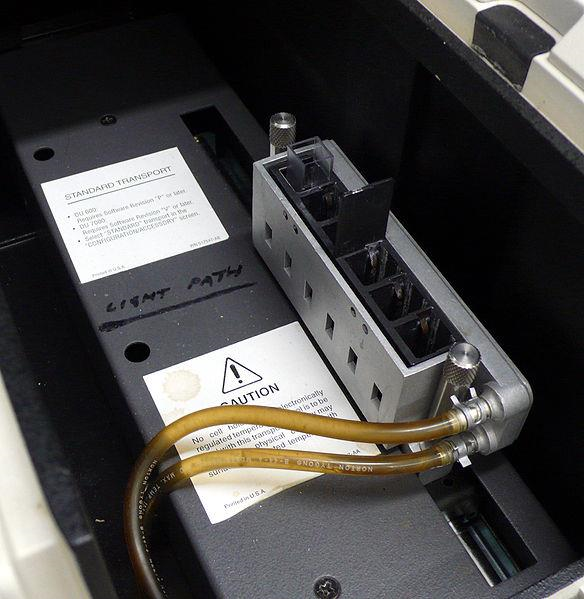
Figure 1: Cuvette holder in a temperature-controlled Beckman DU640 spectrophotometer. Source: Public domain
Sometimes a liquid sample needs to have its response to light measured in a process called spectrophotometry. Cuvette holders are specialized devices that hold cuvettes, special purpose devices for holding liquid samples, in place and allow light to be delivered to and recovered from the sample. With a cuvette holder and other required equipment, the absorbance and transmission of light by the sample can be measured.
Theory of Operation
Cuvette holders are devices used to securely hold cuvettes during various laboratory measurements, most commonly in spectrophotometry. In spectrophotometry, the cuvette holds a sample solution, and light of a specific wavelength is passed through the cuvette. The amount of light absorbed, transmitted, or scattered by the sample is measured, and this information is used to analyze the properties of the sample, such as its concentration.
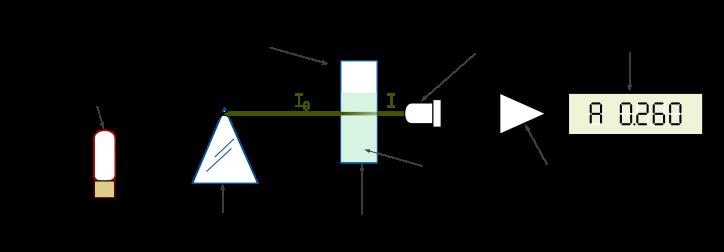
Figure 2: Essential parts of a spectrophotometer. Source: GFDL/ CC BY-SA 4.0
The primary function of a cuvette holder is to ensure that the cuvette remains in a fixed, secure position during measurements. This is important for obtaining consistent and accurate results. Cuvettes come in various path lengths (typically 1 cm is standard). The path length is the distance the light travels through the sample. The cuvette holder ensures that the cuvette is positioned correctly so that the light travels the intended path length.
Proper alignment of the cuvette with the light source and detector is crucial for accurate measurements. The cuvette holder ensures that the cuvette is aligned such that the light passes directly through the sample without any obstructions.
Ultimately, cuvette holders are used to determine the transmittance and absorbance of a given sample. Transmittance is the fraction of light that passes through the sample. A common equation for transmittance in cuvettes is:

In this equation, is the light intensity after passing through the cuvette and is the initial light intensity. Absorbance is related to transmittance with the following equation:

Absorbance represents the amount of photons that are absorbed by the sample. The cuvette holder's main purpose is to ensure that the cuvette is correctly positioned and securely held in place during measurements, ensuring accurate and consistent results for absorbance and transmittance.
Specifications
Cuvette holders can vary widely based on the intended application and the specific instrument with which they are used. However, there are several common specifications that you might encounter when considering or designing a cuvette holder:
Material
The material from which the cuvette holder is made can affect its durability, chemical resistance, and thermal conductivity. Common materials include stainless steel, PTFE, polypropylene, and anodized aluminum.
Cuvette Size and Shape Compatibility
The holder should be designed to accommodate the specific size and shape of the cuvettes to be used, including:
- Path length (commonly 1 cm, but other sizes exist).
- Cuvette dimensions (e.g., 10 x 10 mm square, 12.5 mm diameter round).
- Type of cuvette (e.g., macro, micro, semi-micro).
Number of Cuvettes
Cuvette holders can hold just one or many cuvettes. Note how many cuvettes the holder can accommodate simultaneously to ensure the holder will meet the needs of your application.
Temperature Control
If the holder has built-in temperature control, specifications might include the temperature range, heating/cooling rate, temperature stability, and uniformity. This specification is especially important for samples with temperature-dependent reactions.
Optical Specifications
Depending on the application, the holder might need to have certain optical properties, like the absence of autofluorescence (for fluorescence measurements) or minimized light scattering.
Connection Ports
For temperature-controlled holders, there might be ports for connecting to a circulating water bath or other temperature-controlling device.
Mechanical Compatibility
Details about how the holder fits into or attaches to the instrument are very important to ensure compatibility. These details could include mounting points, screw holes, or other connectors.
Ease of Cleaning and Maintenance
Some cuvette holders are designed to be easily disassembled or have surfaces that are easy to clean, which is especially important in biological or chemical research to avoid cross-contamination.
Safety Features
Depending on the application, safety features like lids or shields might be included to protect against splashes or other hazards.
When selecting or designing a cuvette holder, it's essential to consider the specific needs of the application and the instrument with which it will be used. Always refer to the manufacturer's specifications and guidelines to ensure compatibility and optimal performance.
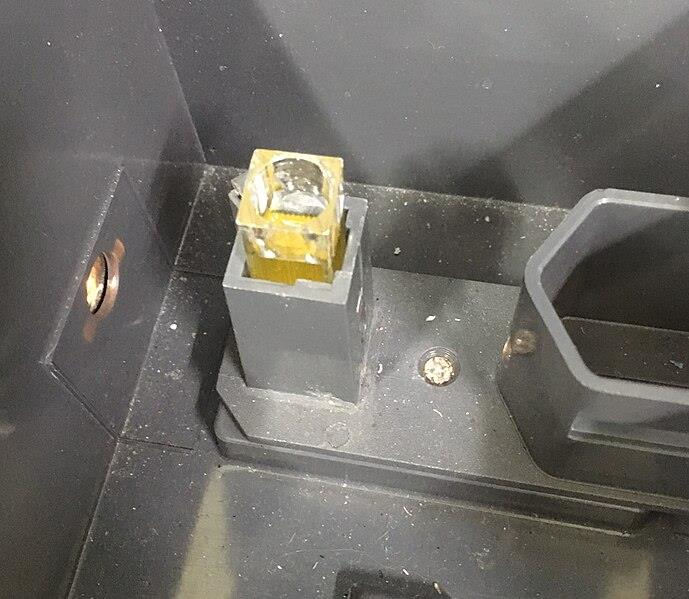
Figure 3: Cuvette holders come in various designs. Source: KhomchatK/CC BY-SA 4.0
Types
Cuvette holders come in various designs and functionalities to cater to the diverse needs of scientific experiments and measurements. Here are some common types of cuvette holders:
Standard Cuvette Holders
These are basic holders designed to accommodate standard-sized cuvettes, often with a 10 mm x 10 mm square cross-section and 1 cm path length.
Micro and Semi-Micro Cuvette Holders
Designed specifically for micro and semi-micro cuvettes, which have smaller sample volumes and often different dimensions than standard cuvettes.
Multiple Cuvette Holders
These holders can accommodate multiple cuvettes simultaneously, allowing for high-throughput measurements or comparative analyses.
Temperature-Controlled Cuvette Holders
These holders come with integrated temperature control mechanisms, allowing the sample's temperature to be maintained or varied during the measurement. They can be connected to circulating water baths or Peltier-based systems for precise temperature regulation.
Magnetic Stirring Cuvette Holders
Equipped with a magnetic stirrer, these holders can continuously mix the sample during the measurement, ensuring uniformity or facilitating reactions.
Flow-Through Cuvette Holders
Designed for continuous flow measurements, these holders allow a solution to flow through the cuvette during the experiment. They're often used in chromatography or kinetic studies.
Long Path Length Cuvette Holders
These are designed for cuvettes with path lengths greater than the standard 1 cm, allowing for measurements of samples with very low concentrations.
Integrating Sphere Holders
Used in conjunction with an integrating sphere, these holders are for measuring the total reflection and transmission characteristics of scattering samples.
Cell Cuvette Holders
Designed for biological samples, these holders can accommodate cuvettes that are designed to maintain living cells in a controlled environment during measurements.
When selecting a cuvette holder, it's essential to consider the specific needs of the experiment and ensure compatibility with both the cuvette and the instrument being used.
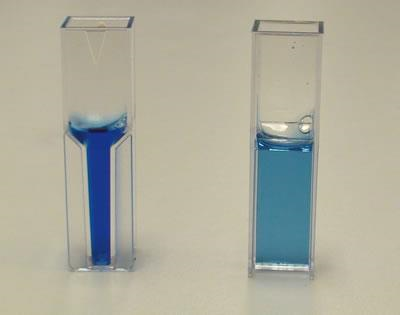
Figure 4: Cuvettes for spectrophotometry assays. Source: Viv Rolfe/CC BY-SA 4.0
Features
Cuvette holders come with a variety of features that enhance their utility and adaptability for different applications. Here are some common features found in cuvette holders:
Alignment Features
Common features of cuvette holders that aid with alignment include:
- Secure positioning mechanisms
- Notches
- Screws
- Alignment guides
These features ensure that the cuvette remains stable and in the correct position during measurements. They also help to ensure that the cuvette is correctly aligned with the light path of the instrument.
Temperature Control Features
While not all cuvettes require temperature control, for certain samples it is an absolute must. Some cuvette holders have integrated heating and cooling systems, allowing for precise temperature regulation of the sample. In temperature-controlled holders, insulation helps maintain the desired temperature and minimizes external temperature interference.
Flow Control Features
Some samples used in cuvettes are just fine in a static condition. Other sample types or applications require movement. Some holders come with a magnetic stirrer to mix the sample continuously, ensuring uniformity or promoting reactions. In flow-through cuvette holders, channels and ports allow solutions to flow in and out of the cuvette.
Quick Release Mechanism
Allows for easy insertion and removal of cuvettes for fast operation.
Adjustable Path Length
Some cuvette holders allow for the adjustment of the cuvette's path length, facilitating measurements at varying concentrations.
Rugged Design
For field applications or challenging environments, some cuvette holders are designed with enhanced durability and resistance to environmental factors.
Easy Cleaning Features
Surfaces that are easy to clean or components that can be quickly disassembled are essential in some research settings to prevent cross-contamination.
The specific features a cuvette holder might have depends on its intended application and the design of the associated instrument. When selecting a cuvette holder, it's essential to consider the needs of the experiment and ensure that the holder's features align with those requirements.
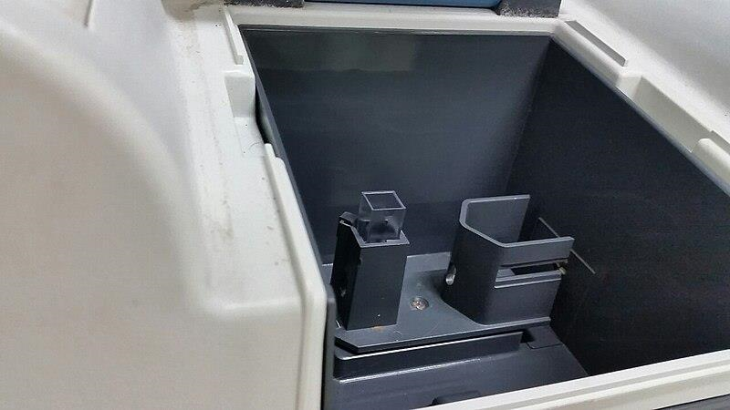
Figure 5: Transparent side direct to light. Source: Ittarusp/CC BY-SA 4.0
Manufacture
The manufacturing of cuvette holders involves a combination of material selection, machining, assembly, and quality control processes. The specific steps can vary depending on the design and features of the cuvette holder, but here's a general overview of how they are manufactured:
Design and Prototyping
Engineers and designers create detailed drawings of the cuvette holder, considering the specific requirements of the application. Prototypes might be produced using rapid prototyping techniques, like 3D printing, to validate the design.
Material Selection
Based on the design requirements like chemical resistance, temperature control, and optical properties, appropriate materials are selected. Common materials include stainless steel, plastics (like PTFE or polypropylene), and anodized aluminum.
Machining and Fabrication
CNC machines are often used to achieve high precision while machining parts of the cuvette holder. Processes like milling, turning, and drilling are used to shape the components. For plastic components, injection molding might be employed.
Metal parts might undergo processes like anodizing, polishing, or coating to improve their appearance, resistance to corrosion, or specific functionalities. Plastic parts might be treated to enhance their chemical resistance or optical properties. Throughout these steps, special attention is paid to tolerances to ensure the cuvette holder will meet the requirements of the design.
Assembly
Individual components are assembled to form the complete cuvette holder. This might involve screwing, snapping, or using adhesives to join parts together. For holders with electronic or temperature control features, wiring and integration of sensors or heating/cooling elements occur at this stage.
Testing and Quality Control
Precision devices like cuvette holders require special testing and quality control steps. Each cuvette holder undergoes rigorous testing to ensure it meets the specified requirements. Tests might include checking alignment, ensuring temperature control operates correctly, and verifying that the holder fits properly within the intended instrument.
It's worth noting that the manufacturing process can be more complex for cuvette holders with advanced features, like integrated temperature control or magnetic stirring. Additionally, the strictness of quality control and the precision of manufacturing processes can vary based on the intended application of the cuvette holder. For example, a holder intended for high-precision optical measurements might require more stringent manufacturing tolerances than a basic holder for general lab use.
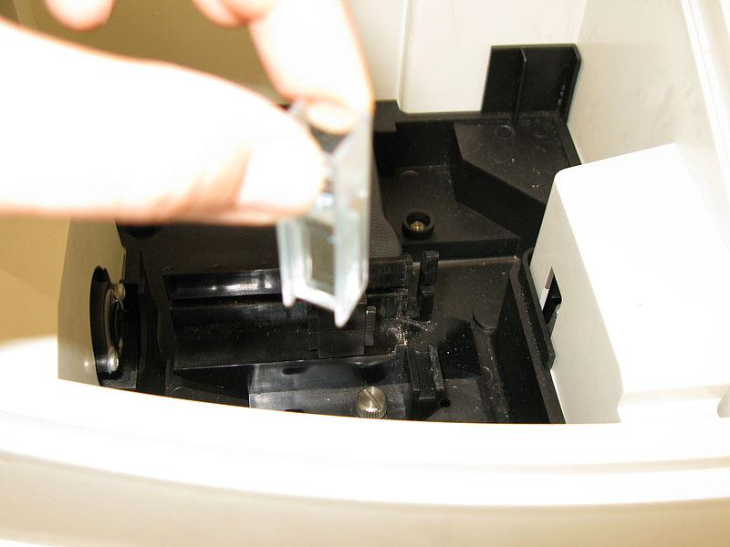
Figure 6: Inserting a cuvette into a spectrophotometer. Source: Viv Rolfe/CC BY-SA 4.0
Applications
Cuvette holders are primarily used in conjunction with cuvettes to facilitate various optical measurements. Their applications span a wide range of scientific and industrial areas. Here are some of the main applications for cuvette holders:
UV-Vis Spectrophotometry
UV-Vis spectrophotometry is used to measure the absorbance of light by a sample at various wavelengths. This method is commonly employed to determine the concentration of solutes in a solution based on Beer's Law.
Fluorescence Spectroscopy
Measures the fluorescence emission of a sample after being excited by a specific wavelength of light. This method is used in biochemistry and molecular biology to study proteins, nucleic acids, and other biomolecules.
Turbidity and Scattering Measurements
These measurements assess the scattering of light by particles in a sample. They are commonly used in water treatment plants to measure water clarity.
Colorimetry
Colorimetry measures the color of a sample and is often used in the food and beverage industry to ensure product consistency.
Chemical Kinetics
This process monitors the change in absorbance or fluorescence of a sample over time. It can be used to study reaction rates and mechanisms.
Circular Dichroism (CD) Spectroscopy
CD is used to measure differences in the absorbance of left-handed versus right-handed circularly polarized light. It is often used to study the secondary structure of proteins and other chiral molecules.
Raman Spectroscopy
Raman spectroscopy uses inelastic scattering of light to study vibrational, rotational, and other low-frequency modes in a system.
Flow Cytometry
While not using traditional cuvettes, flow cytometry involves flowing cells through a small channel and using optical methods to analyze them. Some cuvette holders are designed for flow-through applications.
Biochemical and Biological Assays
Cuvette holders can be used for assays that require optical measurements, such as enzyme activity assays or cellular studies.
The specific application dictates the type and features of the cuvette holder used. For example, a temperature-controlled cuvette holder might be preferred for studying temperature-dependent reactions, while a multi-cuvette holder would be ideal for high-throughput screening.

Figure 7: Filling the sample solution at two out of three parts of the height of the cuvette. Source: KhomchatK/CC BY-SA 4.0
Standards
Cuvette holders, being components of optical measurement systems, are often governed by standards related to the instruments they are used with, especially spectrophotometers, fluorimeters, and other optical devices. Some of the relevant standards are:
ASTM E387
This standard covers the determination of the concentration of a solute in a solution in terms of the percentage transmittance or absorbance of a liquid sample. The alignment and positioning of the cuvette by the holder play a crucial role in ensuring accurate measurements as per this standard.
ASTM E275
This ASTM standard focuses on the description of the standard practice for describing and measuring performance in UV-Vis spectrophotometry. The cuvette holder's role in ensuring accurate measurements is implicit in such standards.
Instrument-Specific Standards
Some standards are specific to particular instrument brands or models. These standards might specify the mechanical dimensions, alignment requirements, or other specific features that a cuvette holder must have to be compatible with a given instrument.
Quality Control and Manufacturing Standards
While not specific to cuvette holders, manufacturing and quality control standards, like ISO 9001, can apply to the production of cuvette holders to ensure consistent quality and reliability.
It's essential to note that while there are standards governing spectrophotometry and other optical measurements, there might not always be a specific standard just for the cuvette holder. However, the cuvette holder plays a crucial role in ensuring that the overall system can meet the relevant standards. When selecting or designing a cuvette holder, it's important to be aware of the standards that apply to the specific application or industry and ensure compliance.
References
CM Scientific—What is a cuvette and how is it used?
ThorLabs—Cuvette Holder with Four Light Ports
Admesy—What is a Cuvette Holder?
Ossila—Cuvette Holder
StellarNet—Cuvette Holders
Ocean Insight—General Purpose Cuvette Holders
Fireflysci—How to Select Cuvettes for UV VIS Measurements & Cuvette Material Guide
ASTM E387-04(2014)—Standard Test Method for Estimating Stray Radiant Power Ratio of Dispersive Spectrophotometers by the Opaque Filter Method
ASTM E275-08(2022)—Standard Practice for Describing and Measuring Performance of Ultraviolet and Visible Spectrophotometers
Related Information
GlobalSpec—Mettler Toledo introduces its three-in-one liquid analyzer