NMR Probes Information
Nuclear magnetic resonance (NMR) probes are integral components of NMR spectrometers, sophisticated instruments used in the detailed analysis of molecular structures and dynamics. Serving as the interface between the spectrometer and the sample, NMR probes have three primary functions: holding the sample, exciting nuclear spins with radio frequency (RF) energy, and detecting the NMR signal that emanates from the sample.
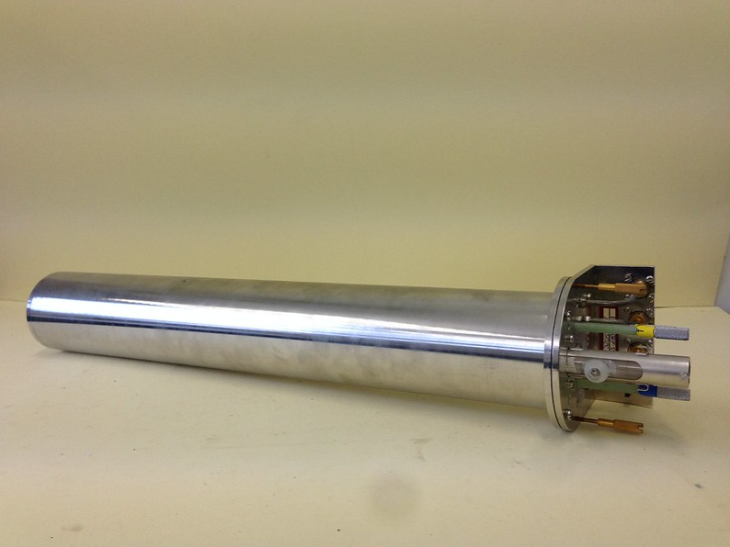
Figure 1: A steel probe for nuclear magnetic resonance. Source: NIMR London/CC BY 2.0 DEED
The versatility of NMR probes is highlighted by their ability to be interchanged according to the specific requirements of the experiment. This includes the type of nuclei being studied and the nature of the sample. Such adaptability is important in NMR spectroscopy, as different samples and nuclei require different experimental conditions.
A key feature of these probes is their incorporation of RF coils. These coils are precisely tuned to generate specific magnetic field strengths, essential for the accurate excitation and detection of particular nuclei. In more advanced probe designs, multiple coils are used, including an inner coil and one or more outer coils. This multi-coil arrangement allows the probe to respond to multiple frequencies, expanding the range of experiments that can be conducted. Due to its proximity to the sample, the inner coil offers higher sensitivity, which helps in detecting weak signals.
Probes are also designed to accommodate NMR tubes of various sizes. The size of the tube is significant as it determines the amount of sample that can be analyzed. Larger tubes are preferable for samples with limited solubility, as they can contain more material within the coil's effective range. In contrast, smaller tubes are used when higher sample concentration is needed, especially in cases where solubility is not a limiting factor.
Modern NMR probes boast advanced features such as auto-tuning and pulsed field gradients. Auto-tuning simplifies the operation by negating the need for manual adjustments to compensate for impedance differences in the probe's components. Pulsed-field gradients, a feature in contemporary probes, enable the application of field-gradient pulses. These pulses are pivotal in many modern NMR experiments, allowing for more sophisticated and informative analyses.
Types
NMR spectroscopy is a pivotal technique in modern scientific research, leveraging various types of NMR probes, each specialized for distinct applications.
https://www.youtube.com/watch?v=sfiQFQYgJuQ
Video: How NMR Spectrometer Works. Source: Chemistry Channel
Liquid-State NMR Probes
Liquid-state NMR probes are primarily used for samples in a liquid state. These probes are known for their high sensitivity and are optimized for analyzing homogeneous solutions. They offer significant advantages in high-resolution spectroscopy, making them ideal for studying a wide range of organic and biochemical compounds. However, their use is limited to liquid samples, which can be a constraint when dealing with solid or gaseous substances. These probes are commonly employed in organic chemistry, biochemistry, and pharmaceutical research, particularly for examining molecular structures and interactions in solution.
Solid-State NMR Probes
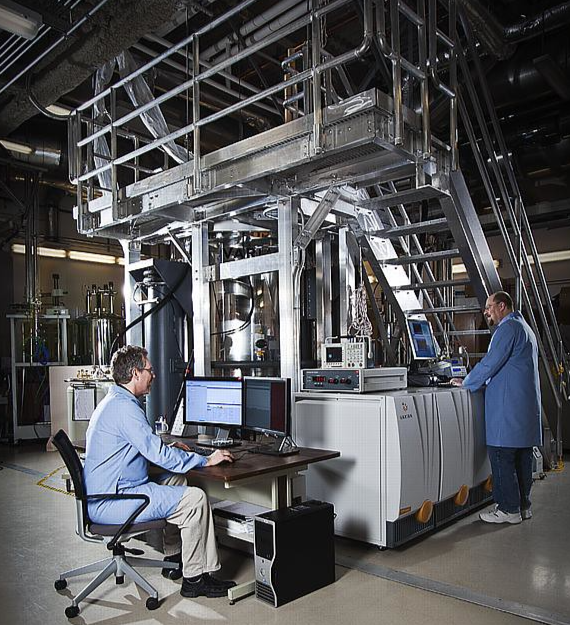
Figure 2: Wide-Bore NMR. Source: Environmental Molecular Sciences Laboratory/CC BY-NC-SA 2.0 DEED
Solid-state NMR probes are specifically designed for the analysis of solid samples. They utilize stronger RF pulses and are often equipped with mechanisms for spinning the sample at high speeds, a technique known as magic angle spinning (MAS). These probes are invaluable in studying crystalline solids, polymers, and biological macromolecules in their native state, providing intricate details about their structure and dynamics. Despite their advantages, they tend to have lower sensitivity compared to liquid-state probes and require specialized sample preparation techniques. Their applications span materials science, polymer research, and structural biology.
Cryogenic Probes
Cryogenic probes in NMR spectroscopy use cooling technology to significantly enhance sensitivity. Often used in liquid-state NMR, these probes feature cooled RF coils and preamplifiers to reduce thermal noise. This cooling results in heightened sensitivity, enabling the detection of samples with low concentration. However, these probes are more costly and complex, requiring liquid helium or nitrogen for cooling. They are especially useful in metabolomics, proteomics, and other fields where detecting trace amounts in complex mixtures is crucial.
HR-MAS Probes
High-resolution magic angle spinning (HR-MAS) probes are a specialized type of solid-state NMR probe. They are designed to handle semi-solid and gel-like samples, providing high-resolution spectra for materials that are neither fully solid nor liquid, such as tissue samples and gels. However, the spinning of samples in HR-MAS probes can lead to heating and potential sample degradation, and they are generally limited to small sample sizes. These probes are predominantly used in biological and medical research, including tissue analysis and the study of complex biomolecular structures.
Benchtop NMR Probes
Benchtop NMR probes are integral to compact NMR systems, designed for simplicity and accessibility. They are particularly suitable for routine analysis and educational purposes. These probes offer a user-friendly interface, lower cost, and minimal maintenance requirements, making them ideal for educational settings and routine industrial applications. However, they have lower resolution and sensitivity compared to larger, more sophisticated NMR systems and are limited in their functionality for advanced NMR techniques.
Components
NMR probes are intricate devices composed of various components, each contributing to the probe's overall functionality in NMR spectroscopy. Understanding these components is essential for comprehending how NMR probes operate and their role in the broader context of NMR spectroscopy.
RF Coils
The RF coils in an NMR probe are needed for both the excitation of nuclear spins in the sample and the detection of the resulting NMR signal. These coils generate the RF magnetic field when an alternating current flows through them, which is necessary to excite the nuclear spins in the sample. Upon relaxation of these spins, they emit an NMR signal, which the RF coils then detect. The design and tuning of these coils are paramount, as they must resonate at specific frequencies corresponding to the nuclei being studied. This specificity ensures that the probe can effectively excite the nuclei and accurately detect the NMR signals, which is fundamental for the analysis of molecular structures.
Probe Body
The probe body, often a cylindrical structure, houses the internal components of the NMR probe. It provides mechanical support and ensures the precise alignment of the RF coils and other components. The design of the probe body is tailored to maintain the stability and integrity of the probe, especially considering the high magnetic fields and the varying temperatures it might be exposed to during experiments. The probe body's material and construction are also significant as they must be non-magnetic and resistant to RF interference, ensuring that the probe's performance is not compromised.
Sample Tube Holder
This component is designed to hold the NMR sample tube in place within the probe. The sample tube holder is critical for ensuring that the sample is correctly positioned within the magnetic field and relative to the RF coils. Precise positioning is vital for achieving uniform excitation of the sample and optimal detection of the NMR signal. This holder is designed to accommodate tubes of various sizes, depending on the type of probe, and allows for the sample to be easily inserted and removed from the probe.
Amplifiers
Amplifiers in NMR probes are electronic components that amplify the NMR signal detected by the RF coils before it is processed by the spectrometer's main console. This amplification is necessary because the raw NMR signal is typically very weak and needs to be strengthened for accurate analysis and processing. The preamplifiers must be highly sensitive and have low noise levels to ensure that the signal's integrity is maintained and that the signal-to-noise ratio is optimized.
Shimming Coils
Shimming coils are specialized coils used to fine-tune the magnetic field within the NMR probe. A homogeneous magnetic field is essential for high-resolution NMR spectroscopy. Even minor variations in the magnetic field can lead to distortions in the NMR spectrum. Shimming coils adjust the magnetic field at various points within the probe, correcting for inhomogeneities and ensuring that the field is as uniform as possible across the sample. This uniformity is critical for obtaining high-quality, high-resolution NMR spectra.
Temperature Control System
Many NMR experiments require the sample to be at a specific temperature, sometimes even at extreme cold or hot temperatures. The temperature control system in an NMR probe allows for the regulation of the sample's temperature. This system can include heaters, coolers, and temperature sensors, ensuring that the sample is maintained at the desired temperature throughout the experiment. Accurate temperature control helps in the study of temperature-dependent properties of molecules and for experiments where reaction kinetics are monitored.
Industrial Applications
NMR probes are tools used in various industries, providing insights into molecular structures and dynamics.

Figure 3: Source: Chemical plant. Davy Dova/Euractiv
Pharmaceutical Industry
In the pharmaceutical industry, NMR probes are used in drug discovery and development. They assist in the structural elucidation of new compounds, verification of synthesized drug molecules, and quality control of final products. The precision of NMR spectroscopy in determining molecular structures and conformations is invaluable for understanding the interactions between drugs and biological targets. This level of detail aids in the optimization of drug efficacy and safety. Additionally, NMR is used for quantifying impurities and monitoring the stability of pharmaceuticals, ensuring compliance with stringent quality standards.
Chemical Industry
The chemical industry relies on NMR probes for the analysis and quality control of chemical products, including polymers, petrochemicals, and fine chemicals. NMR spectroscopy provides detailed information about molecular structures, purity levels, and chemical compositions, essential for product development and quality assurance. In polymer science, NMR is used to determine molecular weights, chain architecture, and copolymer composition, and is used for developing new materials with desired properties. In petrochemicals, NMR helps in characterizing complex mixtures and monitoring reaction processes.
Food and Beverage Industry
NMR probes play a role in the food and beverage industry, particularly in quality control, authentication, and research. They are used to analyze the composition of food products, detect adulteration, and ensure consistency in taste and texture. NMR spectroscopy can identify and quantify components like fats, sugars, and proteins, to determine the nutritional content of foods. It is also employed in the study of food spoilage and shelf life, aiding in the development of better preservation techniques.
Environmental Analysis
In environmental analysis, NMR probes are utilized for detecting and identifying pollutants in soil, water, and air samples. This includes the analysis of organic contaminants, pesticides, and toxic substances. NMR's ability to analyze complex mixtures without extensive sample preparation makes it a valuable tool for monitoring environmental quality and assessing the impact of pollutants on ecosystems.
Academic and Research Institutions
Academic and research institutions utilize NMR probes for a wide range of scientific studies, from basic research in chemistry and biology to advanced interdisciplinary projects. NMR spectroscopy is a fundamental tool in research laboratories, enabling students and scientists to explore molecular structures, reaction mechanisms, and material properties. Its use in academia fosters innovation and contributes significantly to the advancement of science and technology.