Wind Tunnels Information
Wind tunnels are devices that provide invaluable insights into aerodynamics. They are carefully designed and built environments, mirroring the physics of the natural world, in which air flows can be manipulated, observed, and analyzed. For decades, wind tunnels have been instrumental in the design and refinement of a broad range of objects, from aircraft wings to train carriages, and automobiles to sports equipment.
The primary objective of wind tunnels is to understand the effects of wind on different structures and objects in a controlled and repeatable setting. A wind tunnel enables engineers, researchers, and designers to meticulously fine-tune their products for efficiency, performance, and safety.
Configurations
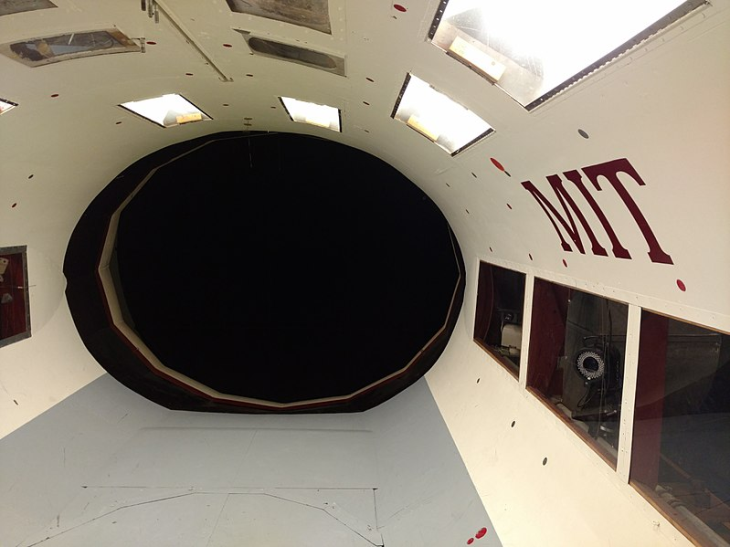
Figure 1: MIT wind tunnel. Source: Phoebe/CC BY-SA 4.0
Based on Wind Speed
Low-Speed Wind Tunnels
These tunnels are designed to study the aerodynamics of objects at low speeds, generally less than the speed of sound. They are widely used in industries such as automotive, civil engineering, and sports. The fans in these wind tunnels are often powerful enough to achieve the required wind speeds without the need for complex components to manage the air flow.
High-Speed Wind Tunnels
High-speed wind tunnels are used to test objects at speeds close to or beyond the speed of sound. These tunnels require special design considerations to manage the shock waves that form at these speeds. Components such as nozzles and diffusers have to be specially designed for these conditions.
Supersonic and Hypersonic Wind Tunnels
Used mainly in aerospace and defense industries, these wind tunnels can create airflows at several times the speed of sound. They often use highly pressurized air or even other gases and require cooling systems to manage the heat generated at these speeds. The test sections in these wind tunnels are often small due to the high energy requirements.
Closed-Circuit Wind Tunnels
These tunnels recirculate the air within them, making them more energy-efficient, especially for long-duration testing. However, they also require more complex components to manage the heat and turbulence introduced into the system by the recirculation.
Open-Circuit Wind Tunnels
In these tunnels, air is drawn in from the environment, passed over the test object, and then expelled. These tunnels are simpler and cheaper to construct and operate but can be less energy-efficient than closed-circuit tunnels. They are often used when the exhaust gases or particles from the test might contaminate the airflow if recirculated.
Climatic Wind Tunnels
These specialized tunnels are capable of simulating a wide range of environmental conditions, such as temperature, humidity, and even precipitation. They are used to test the performance of objects under various weather conditions and are particularly important in the automotive and aerospace industries.
Based on Application
Educational Wind Tunnels
These are typically smaller, lower-speed tunnels suitable for classrooms or small labs. They are often used for basic aerodynamics demonstrations and are perfect for institutions aiming to provide practical learning experiences.
Automotive Wind Tunnels
https://www.youtube.com/watch?v=1lszpNisyQI
Video: Car in a wind tunnel. Source: Cars Garage
These wind tunnels are specifically designed for studying the aerodynamics and airflow of automobiles. They often include features that allow the wheels to turn while the automobile stays in place to help simulate real-world conditions and are invaluable in the design of high-performance and efficient vehicles.
Aerospace Wind Tunnels
https://www.youtube.com/watch?v=wikjMVWvVhE
Video: Aerospace wind tunnel. Source: Leonardo
These are high-speed wind tunnels that can generate air speeds equivalent to supersonic and hypersonic flight. They are essential for the testing of aircraft components, providing valuable data on lift, drag, and stability. Often in aerospace wind tunnels, scale models will be used that can reduce the size of the wind tunnel.
Sport Science Wind Tunnels
These tunnels are built to investigate the aerodynamics of athletes and sports equipment. From cyclists, to bobsleigh, to skiers, these wind tunnels can provide valuable insights into how to improve performance and efficiency in various sports. The majority of wind tunnel facilities are created for aerospace, automobile, and civil engineering industries but facilities exist for the primary purpose of research development in sports.
Industrial Wind Tunnels
These tunnels are used to study how structures, such as buildings or bridges, will stand up to wind forces. These are crucial in designing structures that can withstand high wind loads and severe weather conditions. Wind can cause structural damage and swaying in a phenomenon called vortex shedding. Structural engineers will study the effects of wind on structures to ensure safety in design. Models of the structure are used to study how wind affects the structure in industrial wind tunnels.
Components
A wind tunnel typically consists of several main components, each playing a critical role in ensuring the accurate simulation and measurement of airflow around the test object. There are many types of wind tunnels that are built using different methodologies. The design and components of a wind tunnel can vary greatly depending on its specific purpose, the speed regime it operates within, and the industry it serves.
Test Section
This is the central area of the wind tunnel where the actual object or model is placed for testing. The test section can vary in size based on the specific requirements of the experiment or test. The cross-section of this area is often square or circular and must be designed to have a uniform and steady flow of air.
Air Source
This is usually a fan or a series of fans that create the airflow within the tunnel. The power and size of the fan will determine the maximum wind speed that can be achieved in the test section.
Settling Chamber
This is the section located before the test section where the air is "settled," for instance, it is slowed and smoothed out to reduce turbulence and ensures a steady, uniform airflow into the test section. The settling chamber often contains a series of screens, baffles, or a honeycomb structure to assist in this process.
Diffuser
Positioned after the test section, the diffuser is designed to reduce the speed of the air before it is either expelled or recirculated. This helps prevent turbulence and pressure buildup that could interfere with the fans or the airflow in the test section.
Return Circuit
In closed-loop wind tunnels, the air is recirculated back to the beginning of the tunnel using a return circuit. This is more energy-efficient as it reuses the air, but it also requires more space and can introduce heat and turbulence into the system if not properly managed.
Instrumentation
A wind tunnel also contains a variety of measurement instruments to capture data. These may include pressure sensors, temperature sensors, anemometers to measure wind speed, and force balance systems to measure aerodynamic forces. More sophisticated tunnels may also have systems to visualize the airflow, such as smoke generators, laser-based flow visualization systems, and smoke wands or probes. The smoke wand, often handheld, releases smoke into the air stream, helping researchers visualize and understand the air flow patterns around the object being tested.
Model Mounting Systems
These are used to secure the model or object being tested in the test section. The mounting system often includes a system for measuring forces and moments on the model, which are crucial for understanding aerodynamic performance.
Control System
This is the system that controls the operation of the wind tunnel, including the wind speed, the measurement systems, and often the positioning of the model. In modern wind tunnels, this is usually a computerized system that allows precise control and automation of the testing process.
Industry Applications
Wind tunnels are essential tools for many industries. They are widely used in a variety of fields to study and visualize the effects of wind on different structures and objects. Here are some of the primary industries that make use of wind tunnels:
Aerospace and Defense
Wind tunnels play a significant role in the design and testing of aircraft, rockets, and satellites. They're used to study the aerodynamic properties of these vehicles, which includes understanding lift, drag, stability, and control characteristics.
Automotive
Car manufacturers use wind tunnels to test and improve vehicle aerodynamics. By optimizing the way air flows around a car, manufacturers can improve fuel efficiency, performance, and the vehicle's overall stability.
Civil Engineering and Architecture
In these fields, wind tunnels are used to test the effects of wind on structures like buildings, bridges, and towers. This helps engineers design structures that can withstand wind loads and extreme weather conditions.
Sports Science
Wind tunnels are used in the sports industry to study and improve the performance of athletes and sports equipment. For example, cyclists, skiers, and race car drivers often use wind tunnels to understand how their posture or equipment design affects air resistance and their overall performance.
Renewable Energy
Wind turbines, key in the production of renewable energy, are tested in wind tunnels to study their aerodynamics, structural integrity, and efficiency. This aids in the design of more efficient and reliable wind energy systems.
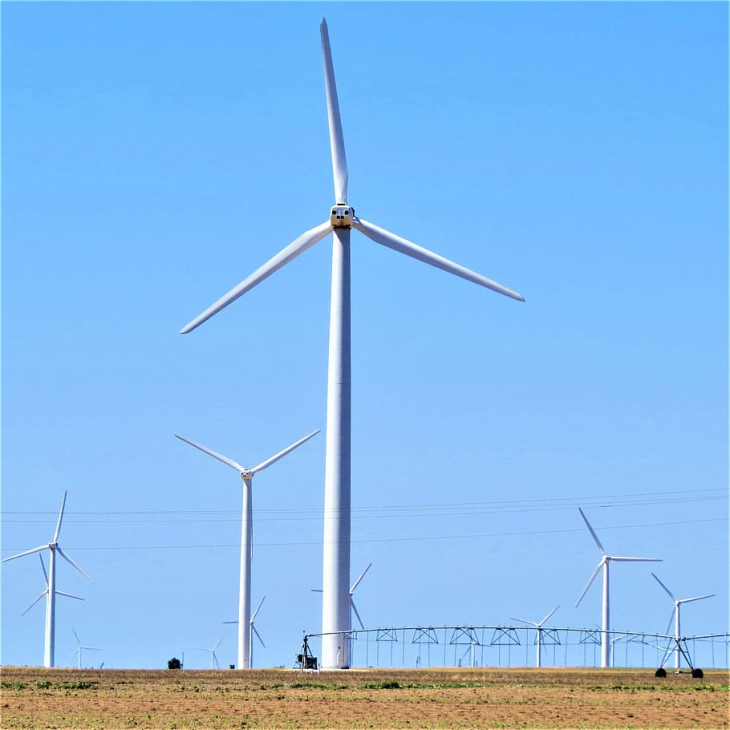
Figure 2: Windmill. Source: Public domain
Marine Industry
Wind tunnels can also be used to test the aerodynamics of ships, particularly the above-water portion, and offshore structures. It helps in the designing of ships that are more stable and efficient.
Rail Industry
High-speed trains are often tested in wind tunnels to optimize their design for minimal air resistance, to study the impact of crosswinds, and to ensure passenger comfort when trains pass each other at high speeds.
Environmental Science
Wind tunnels are used in environmental studies to simulate and study the dispersion of pollutants in the atmosphere, understand wind patterns, and study wind erosion and deposition processes.
History
The history of wind tunnels begins in the late 19th century. The evolution of these tools is closely tied to advances in aeronautics, automotive design, and the development of increasingly sophisticated engineering methods.
Late 19th Century—Early Inceptions
The earliest attempts at creating wind tunnels were made by inventors and scientists looking to better understand flight. The British aeronautical pioneer, Sir Francis Wenham, is typically credited with designing the first wind tunnel in 1871. Wenham's wind tunnel was a basic setup that used a fan to create airflow over models of wing sections. It marked a critical step in the development of the first successful heavier-than-air flying machines.
Early 20th Century—Birth of Aviation
The early 20th century saw a boom in wind tunnel development due to the birth of the aviation industry. The Wright brothers, credited with inventing the first successful airplane, built their own simple wind tunnel in 1901 to test airfoil shapes. This wind tunnel was instrumental in their development of an aircraft capable of controlled, sustained flight.
In 1917, the National Advisory Committee for Aeronautics (NACA, the predecessor to NASA) established the first wind tunnel for research in the United States, marking the beginning of systematic aeronautical research.
Mid-20th Century—Supersonic Testing
As the aerospace industry progressed and aircraft speeds increased, so too did the need for wind tunnels capable of replicating these conditions. In 1947, a “slotted throat” supersonic wind tunnel was constructed at Langley Research Center, enabling researchers to study aerodynamics at speeds beyond the sound barrier.
Late 20th Century—Space Age and Beyond
The advent of the Space Age required testing at hypersonic speeds. NASA's Langley Research Center developed the hypersonic wind tunnel during the 1960s, which could reach speeds of Mach 7.
In the late 20th and early 21st centuries, wind tunnels have become increasingly sophisticated. With the development of computational fluid dynamics (CFD), virtual wind tunnels have been created that allow for the simulation of airflows around designs without the need for physical testing.
Modern Era—From Physical to Virtual
The current trend in wind tunnel technology leans toward the use of virtual wind tunnels, due to advances in computer technology and simulation software. These virtual wind tunnels provide designers with the ability to test and optimize their designs quickly and cost-effectively. However, physical wind tunnels still play a crucial role, especially in validating computer models and performing tests where simulations are not yet reliable.
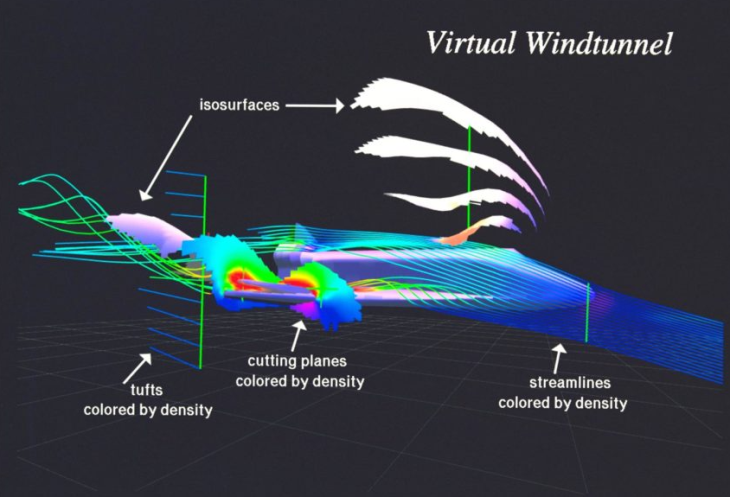
Figure 3: Virtual wind tunnel simulation. Source: Public Domain
Throughout their history, wind tunnels have played a key role in advances in aeronautics, space exploration, automotive design, civil engineering, and even sports science, providing invaluable data on how different structures interact with wind. As our need to understand and control the forces of wind continues to grow, so too will the importance and sophistication of wind tunnel testing.
Related Information
GlobalSpec—High-speed experiments improve hypersonic flight predictions