Electronic Noses Information
Electronic sensing is when an electronic device can reproduce human senses. The electronic nose is a device that aims to mimic the human olfactory system for smells. As early as 1982 the first electronic olfactory system was proposed. This first model presented two assumptions of the mammalian olfactory system: (1) odor-specific transducers are not necessary and (2) odor signals can be learned. In 1994, a new definition for artificial olfactory systems was presented:
“An electronic nose is an instrument, which comprises an array of chemical sensors with partial specificity and an appropriate pattern recognition system, capable of recognizing simple or complex odors.” — Gardner and Bartlett (1994, A Brief History of Electronic Noses)
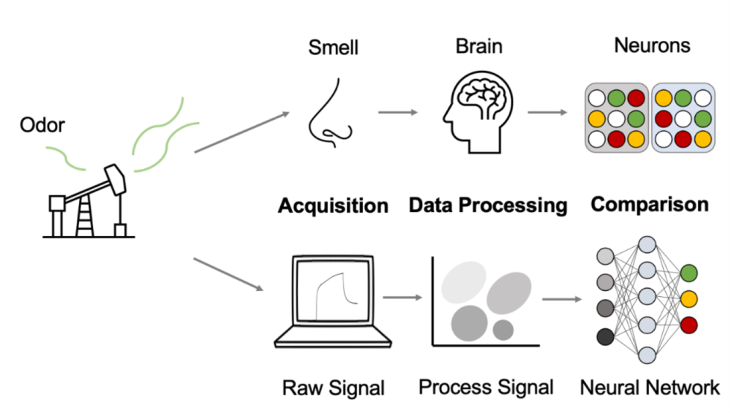
Figure 1. Electronic nose overview (Source: Nanomaterials21/CC BY-SA 4.0)
As such, electronic noses, often abbreviated as E-noses, are electronic sensing devices used to objectively analyze aromas. E-noses often are comprised of an intelligent sensor array system that mimics biological smell functions.
Electronic noses can be used to “smell” nonodorant volatiles that people and animals may not be able to smell and many electronic noses are application specific. Recent developments in sensor arrays, pattern recognition algorithms, and bionic systems have increased the commercial feasibility of E-noses and many E-nose systems are now available for purchase.
Fundamentals of the Olfactory System
Odors occur when compounds (called odorants) stimulate receptors in the nasal cavity. Odorants are hydrophobic, volatile and small molecules that typically weigh less than 300 Daltons. Based on research in 2014 by Dr. Andreas Keller, people can identify more than one trillion smells, whereas it was previously thought that people could only recognize up to 10,000 different substances based on their smell.
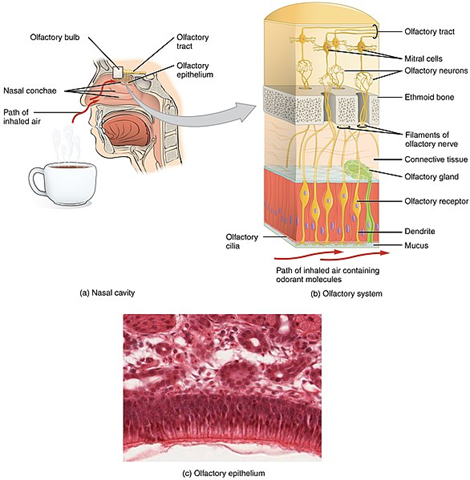
Figure 2. Olfaction in humans (Source: OpenStax/CC BY 4.0)
Mammals have about 6 million to 10 million olfactory sensory neurons in their nasal cavities. Odorant receptors in the nasal cavity can discriminate between those of diverse chemical compounds. Individual odorants can activate more than one receptor and some bind to a specific receptor depending on their chemical structure. The activation pattern of these compounds on receptors signals the brain and lets people differentiate between odors.
Components of Electronic Noses
Science in 1 minute: How does an electronic nose work
Overview of an electronic nose. Source: Universitat Rovira i Virgili
The primary advantage of E-noses over many other complex technologies that analyze scent is that they are typically less expensive and easier to use. For example, gas spectrometry can more accurately measure the number and concentration of individual components in an odor but is often expensive and more complicated to use. An E-nose can assess the overall profile of a scent without necessarily measuring the concentration of each compound.
Sensors
Sensors are the main component of E-noses that respond to odors. Most electronic noses use chemical sensor arrays that react as soon as gas touches the sensor. Data is interpreted using statistical models and algorithms. Some sensors that have been applied to E-noses include and are not limited to:
- Metal oxide semiconductors (MOS) and metal oxide semiconductor field effect transistors (MOSFET) — Changes in electrostatic potential are recorded by these sensors. MOS and MOSFET sensors are less sensitive to moisture and have less carryover between measurements. MOS sensors are sensitive to compounds such as ethanol and may have difficulty measuring compounds like sulfur and weak acids.
- Gas sensors using conducting polymers (such as polyaniline and polypyrrole as active layers) — Many commercial gas sensors use metal oxides, however conducting polymers offer high sensitivities and shorter response times, making them ideal for use in E-noses. Conducting polymers have a change in resistance when gas is absorbed and are very sensitive to polar compounds. These sensors show more drift but can be used in ambient temperatures. They are also susceptible to moisture sensitivity.
- Sensors based on polymer composites — These sensors may utilize carbon nanotubes and graphene and are adept at gas sensing using electrochemical and optical methods for detection.
- Piezoelectric crystals — Either bulk acoustic wave (BAW) and surface acoustic waves (SAW) sensors can be applied to E-noses. When the sensors encounter a gas, there is a shift in frequency that can be used to identify the compounds.
- Olfactory receptors — Recent bio-inspired advances in electronic noses use nano-biotechnology to create bioelectronic noses. Bio-electronic noses can use olfactory receptors, which are cloned proteins from biological organisms. Each receptor protein responds to a specific odor molecule, much like the mammalian system. Some devices combine multiple sensors to distinguish between a broader range of gases and a wider set of conditions.
Electronic noses can also be used to measure small pressure and temperature changes aside from the organic compounds that make up smell. This can be important when analyzing some smells since physical characteristics can also give information about the odor. For example, beer odors decrease air pressure slightly and increase temperature due to the presence of alcohol vapor. Accommodating these physical characteristics can increase the accuracy of electronic noses in some applications. To simulate mammalian sniffing, moving the air in a pattern across sensors can also increase the accuracy of gas sensors.
Artificial Intelligence
Typically, in E-noses all the sensor data is analyzed by a computing system that employs pattern recognition. Artificial intelligence (AI) and artificial neural networks have often been applied to E-noses. Electronic noses are first trained with samples to build databases to use as references. The system can then recognize new samples by comparing the analysis with that of samples from the database.
Many odors are made of multiple different molecules. Some challenges remain in distinguishing odors accurately and the electronic nose may face challenges by wrongly interpreting collected data as separate smells instead of interpreting a combination of molecules as a certain smell.
Applications
Electronic noses have applications in many industries such as agriculture, food, environment, and in security and military applications. These devices have remarkable applications for manufacturing applications and in the food industry and are beginning to be integrated into other industries. Electronic noses can be used as diagnostic tools in the medical industry too and have been used to diagnose patients. They have also been used in the fragrance and cosmetic industry with success.
Food Industry
The food industry is massive and there is a broad range of products available, from shelf stable to short shelf life and gourmet to simple food. Smell can provide insight into many aspects of the food industry.
- Analyze ripeness of fruit, such as apples, to determine storage time
- Determine when crops are ready for harvest
- Monitor aging liquor
- Differentiate types of black tea and predict tea quality
- Tobacco recognition
- Indoor air quality monitoring
Medical Industry
Being able to smell when someone is sick is not a new realization as doctors hundreds of years ago would smell patients to determine if they had certain illnesses. Some illnesses create distinct odors based on the chemicals they produce in the body.
- Breath analysis for biomarkers and disease diagnosis
- Detection of lung cancer and brain cancer
- Detection of COPD exacerbations
- Nasal implants
- Sensing gut disease from excrement samples
- Measuring blood glucose levels from breath
Electronic noses as a diagnostic tool for medical conditions. Source: Johannes Bintinger|TEDxKlagenfurt
Manufacturing
Manufacturing is a key component of many industries and E-noses can be applied to various stages in the manufacturing process.
- Testing batch consistency
- Detecting contamination and spoilage as well as the presence of maliciously injected foreign substances
- Storage condition monitoring
- Measuring the effect of new or altered manufacturing processes on products
- Clean-up analysis and monitoring after production
E-noses can be used in the research and development phase of many products:
- Objective measurement of aroma profile
- Benchmarking competitive products
Environmental
With environmental concerns at the forefront of many discussions worldwide, E-noses can be used to provide objective assessments in:
• Environmental monitoring
• Identification of volatile organic compounds in environmental samples such as air, water and soil
Security
Electronic noses may be able to complete similar tasks as sniffer dogs and be able to detect substances that are not recognized by the mammalian sense of smell.
• Detection of explosives and other illicit substances
• Detection of dangerous bacteria
Challenges
Electronic noses are required to analyze complex gases that may include water vapor. Sensors are often more sensitive to background gases where humans do not have any receptors for water vapor as this gas is not relevant to smell because it is present everywhere. In the same way, people cannot perceive carbon monoxide.
Sensor drift, disturbance and discreteness issues are the main roadblocks in industrial development of E-noses. Algorithms can be used to help compensate for drift, detect odors, eliminate noise, and discreteness correction. Some algorithms have been proposed for each challenge such as:
Odor detection
- Discriminative classification algorithms
- Heuristic and bio-inspired regression models for odor concentration prediction
Drift compensation
- Chaotic time series-based neural networks used to predict drift
- Transfer learning and domain adaptation-guided classifiers can help compensate for drift in the long term
Disturbance elimination
- Pattern recognition-based counteraction methods
- Self-expression error mismatch-guided abnormal odor detection models
Discreteness correction
- Global affine transformation based linear alignment method to find signal uniqueness
- Batch correction scheme using affine transformation for E-nose calibration
Features
Electronic noses are often manufactured for specific industry applications. Commercial E-nose manufacturers often offer a variety of configurations depending on the company’s requirements.
Many E-noses are small handheld devices that are easy to use for a variety of individuals. Many of these devices can assess smells quickly and effectively within an established error range. Some companies offer E-noses that are not portable but instead are larger and offer more in-depth analysis and varied capabilities. As the applications for E-noses are so diverse there are a wide range of features and broad price ranges, however they typically start from $5,000 to $10,000 and greater.
Related Information
References
Mendez, R. M. L., & Preedy, V. R. (2016). Electronic Noses and Tongues in Food Science (1st ed.). Academic Press.
Pearce, T. C., Schiffman, S. S., Nagle, H. T., & Gardner, J. W. (2006). Handbook of Machine Olfaction: Electronic Nose Technology. Wiley.
Zhang, L., Tian, F., & Zhang, D. (2018). Electronic Nose: Algorithmic Challenges (1st ed. 2018). Springer.