Terrorism & Oil
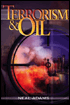
Essential for anyone working in oil-related professions or concerned about resource security, this book discusses the vulnerabilities faced by the global petroleum supply and infrastructure in the wake of the war on terror.
The principal weapons and public symbols of individual terrorists are knives, small arms, and portable explosives (Photo 5-1). The common view of terrorists is a black-hooded militant holding an AK-47 rifle and carrying grenades and automatic pistols. Although lethal on human targets, they are not as effective against larger targets or structures.

The ultimate weapons of a terrorist campaign are not guns and bullets but rather fear the psychological condition of the non-combatants being attacked and their opinions concerning future events. The psychological aspects relate to the general mental health of the populace, or non-combatants, and the manner in which they perceive themselves and others. Although psychological matters and opinion play a role in general warfare, they are more pronounced in a terrorist campaign, principally because the populace is the terrorism target.
At the same time, terrorists have demonstrated a remarkable ability to improvise weapons as well as use conventional warring tools in their quest for disruption. Each page in this ongoing saga seems to tell of an existing weapon used in a new manner. Hijacking and suicide bombing have been combined to create the suicide hijacker. Explosives are placed in the heels of shoes to thwart airport screening devices. This trend of creative thinking and research is increasingly more lethal and difficult to detect.
In the case of oil terrorism, many conventional techniques are used, including:
explosives
bombs
kidnapping
Other terrorist weapons that could have a tangential effect are:
weapons of mass destruction
nuclear

 TABLE OF CONTENTS