Essential for anyone working in oil-related professions or concerned about resource security, this book discusses the vulnerabilities faced by the global petroleum supply and infrastructure in the wake of the war on terror.
Figure 2-2: Rotary Drilling System. Source Energy Information Administration, Office of Oil and Gas
Figure 2-3: The U.S. Strategic Petroleum Reserve
Figure 2-4: U.S. Strategic Reserves Volume by Year. Source 1977 1996, Energy Information Administration, Annual Energy Review 1996, DOE/EIA-0384(96); 1997 Energy Information Administration, Petroleum Supply Annual 1997, DOE/EIA-0340(97)
Figure 2-5: Deepwater development systems. Source Deepwater Gulf of Mexico 2002 America's Expanding Frontier, MMS 2002
Chapter 3: World Oil Supply and Consumption
Figure 3-1: U.S. Petroleum Imports by Source 1980 1997. Source Energy Information Administration, Petroleum Supply Annual 1997, DOE/EIA-0340(97)1, and predecessor
Figure 3-2: Petroleum consumption per person in U.S., 1972 1997. Source Energy Information Administration, 25th Anniversary of the 1973 Oil Embargo.
Figure 3-3: Top 15 World Economies Per Capita Income in 2000 $ vs. Per Capita Energy Consumption. Source SPE 77736, Economides, M. J., et al
Figure 3-4: Estimated Petroleum Demand by End-Use Sector, 1997 Source Energy Information Administration, Annual Energy Review 1997, DOE/EIA-0384.
Figure 3-5: Global Oil Traffic. Source Energy Information Administration
Chapter 4: Oil As a Weapon
Figure 4-1: Oil prices adversely affects U.S. Gross Domestic Product. Source Energy Information Administration, Oil Price Impacts on the U.S.
Copyright PennWell Corporation 2003 under license agreement with Books24x7
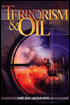

 TABLE OF CONTENTS