LEAK DETECTION
Featured Product from Asahi/America, Inc.
Leak detection in process piping can be a complicated part of any system, so why should it be used? The simple answer is that we are stewards of our environment and responsible for people's safety. However, it has much more nuance than such a simple statement can capture, so here are some thoughts on the subject.
There are three types of leak detection systems. The first is visual detection (i.e., simply watching for leaks), which is used everywhere, from our homes to offices to production plants. It is also as straightforward as it sounds; you see a leak on a pipe and follow it to its source. While it may be simple, effective, and low cost, visual leak detection can't always accurately pinpoint leaks, and it relies on human operation in most cases.
That's where a method such as visual leak detection can turn dangerous. Say you encounter a cyanide or phosgene leak. Is that a chemical you would want to pinpoint the source of manually? Obviously not. Therefore, there are realistically two effective means to identify a leak and find its source; Low Point Leak Detection (LPLD) and Full Line Cable Leak Detection (FLCLD).
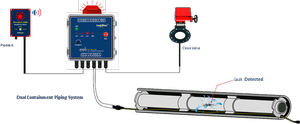
To utilize either of these two methods, a double containment piping system must be implemented. EPA Regulation 40 CFR 280 regulates Underground Storage Tanks (USTs) to minimize the effects of a leading source of groundwater contamination. All pressurized underground piping connections to USTs must be secondarily contained and have automatic line leak detection. The code defines secondary containment as "a release prevention and release detection system for a tank or piping" featuring "an inner and outer barrier with an interstitial space that is monitored for leaks." These interstitial spaces are called sumps, where leak detection occurs in double-containment piping systems. Now, that's a lot to consider when designing an underground piping system.
On top of those specifications, with the implementation of Superfund and CERCLA, the EPA has the power to hold parties liable for any waste, accident, spill, or release into the environment, which could make the worst of a bad situation when already dealing with harsh or aggressive chemicals.
Finally, the other governmental regulatory body involved with underground piping system safety is the Occupational Safety and Health Organization (OSHA) or the OSHA Safety Triangle. This regulation requires that after all other federal laws have been met with regard to secondary containment in piping systems, you must also ensure the protection of the personnel and the ecosystem from the dangers of exposure to aggressive and dangerous chemicals. In other words, federal regulations, EPA, and OSHA all jointly recommend using double containment piping systems and a leak detection system to protect the environment and those working in it.
Now that a double containment piping system has been settled upon and visual leak detection is out of the question, Low Point Leak Detection (LPLD) and Full Line Cable Leak Detection (FLCLD) are the options to choose from. So, what exactly are these systems, and how do they work? CLICK HERE TO CONTINUE READING