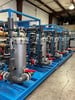
Why Plastics vs. Metals
Featured Product from Asahi/America, Inc.
There are numerous factors the design community must consider when choosing the proper material for a specific application. Some of these factors include: type of media, temperature, pressure, flow rate, environment, local codes, project cost, project schedule, and total install cost.
Let me give you a brief history of the materials used for piping. Historical data has shown that ancient Egyptians used hammered copper for piping, and the Romans used lead pipe for both hot and cold water distribution. Early North American settlers used hollowed logs, until steel – which is still the most common piping material – and copper tubes were produced. As requirements for piping changed, alternative materials with various features, advantages, and benefits were considered. These attributes included corrosion resistance, water purification, ease of installation, and environmental manufacturing concerns. Some of these alternative materials were thermoplastics. Although there are numerous applications for thermoplastic pipe and tubing, the next section will concentrate on a couple of materials used for building service piping. These applications include hot and cold water, condenser water, compressed air, vacuum, and others.