Ball Lenses
Featured Product from Avantier Inc.

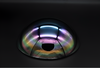
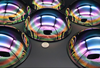
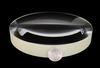
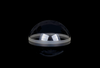
Avantier manufactures and produces ball lenses, spherical optics that collimate light and couple signals between fibers, emitters and detectors.
A ball lens is defined by its diameter (D), index of refraction (n), effective focal length (EFL = nD / 4(n−1)) and back focal length (BFL), which is shorter than EFL by the ball’s radius. All ball lenses show spherical aberration, so the theoretical minimum spot size is not reached. For fiber-to-fiber coupling, two identical ball lenses sit at BFL from the fibers. For laser-to-fiber coupling, the ball’s NA must stay below the fiber’s NA.
| Diameter | 2-50mm</3> |
| Scratch & Dig | 20/10</3> |
| Sphericity | 0.05mm |
| Surface Quality | 40-20 |
| Diameter Tolerance | +/-0.05mm |
Advantages of Ball Lenses
Ball lenses offer several advantages, including:
High Performance: Excellent focusing capabilities and suitability for high-precision optical systems.
Wide Variety: Available in various materials and sizes to suit different applications.
Customization: Tailored solutions for specific optical requirements
Applications
Fiber Optics: Ball lenses are widely used in fiber optic systems to improve the efficiency of light transmission and signal coupling. They serve as beam collimators, focusing the light from the fiber to a parallel beam, which is crucial for long-distance signal transmission and reducing signal loss.
Miniature Optics: In miniature optics, ball lenses are used in devices such as endoscopes, microscopes, and barcode scanners. Their small size and high precision make them ideal for applications where space is limited, and high optical performance is required.
Specialty Microscopes: Ball lenses serve as objective lenses in specialty microscopes. Their ability to focus light precisely makes them suitable for high-resolution imaging applications.