Why Final Inspection Isn't Enough?
Featured Product from Daitron Co., Ltd.

Most manufacturing lines rely on final inspection to ensure product quality.
After assembly is completed, inspectors verify that the correct parts were used, there are no missing parts, and that the final product meets quality requirements.
While this approach helps identify defects before shipment, it raises an important question:
What happens if an assembly mistake is discovered only after the work is already finished?
At that point, rework, additional inspections, and production delays may already be unavoidable.
Common issues include:
- Missing parts
- Incorrect parts
- Incorrect assembly sequence
These issues often occur during the assembly process, not after it.
However, many manufacturers are still relying on inspections performed only at the end of the production process.
What if those mistakes could be detected while the work is still in progress?
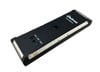
The RICOH SC-20 was designed to address exactly this challenge.
Unlike conventional inspection cameras that focus primarily on finished-product inspection, the SC-20 helps verify assembly status while work is in progress.
Using image recognition technology, the system can automatically check for:
- Missing parts
- Incorrect part installation
- Assembly sequence errors
It can also perform batch inspections once work is completed.
Because the camera, image recognition, and software are integrated into a single system, setup is simple and does not require a dedicated computer.
In addition, inspection results, serial numbers, work histories, and image data can be automatically stored as job logs, enabling improved traceability and providing valuable data for process improvement initiatives.
Quality is no longer something that needs to be checked only after assembly is complete.
With in-process inspection, manufacturers can move from "finding mistakes" to "preventing mistakes before they become defects."