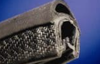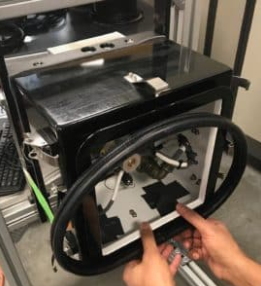
One-piece seals perform better than seals with unbonded terminal ends, as a result there is a growing trend for OEM’s to prefer and design in one-piece seal solutions to their products.
One-piece rubber seals are made by bonding the ends of an EPDM/Silicone seal into a one-piece finished gasket. They are extensively used for sealing and protecting doors, windows, or electronics from environmental elements like water/moisture, dust, heat, cold or gases.
One-piece seals perform better than seals with un-bonded terminating ends for several important reasons:
- Edges are sealed without terminating ends, providing complete 360? protection
- Higher install efficiency: faster/easier to apply, no secondary operations: gluing or precision cuts on the floor/prep station
- Can be designed to fit with a slight stretch so that it forms a tighter seal without deformation.
- Lowers the Cost of Poor Quality (CoPQ) for manufacturers with lower failure rates vs. seals with glued terminating ends.
- Minimize workplace health and safety concerns related to gluing and solvent Hazmat and VOC exposure.
DTi has hundreds of profiles of seals and trim available off the shelf. However, DTi works with multiple clients who want DTi’s flexibility, custom profile and one-piece finishing capabilities. Custom profiles are developed using CFEA – Collaborative Finite Element Analysis to fine tune the best seal for a customer’s needs.
Methods Of Bonding
DTi employs four methods to create one-piece seals and endless gaskets with EPDM and Silicone materials.
- Hot Splicing
- Vulcanization
- Cold Bonding
- Molding
One piece seal before application
Hot Splicing
A technician applies a thin compatible film to both ends of a joint or seam. The seal is then treated with a conventional heat source and pressure to make the joint. Normally hot film splicing is done with 90° end cuts, but this method can also handle 45° miter cuts. While this method requires clean, straight ends it also lends itself to faster production and larger volumes.
Vulcanization
The vulcanization method applies uncured rubber, the same material as the seal, to the seal’s terminating ends. The ends are then pressed together and placed in a heated mold. Vulcanization does not require the ends to be completely smooth or precisely cut. This method is slower than hot splicing so is better for low volumes and customization projects. It is used extensively for window seals, door seals, electronic enclosures and tubing.
Cold Bonding
Cold Bonding is a manual process where glue is applied with a brush and without any heat The material, the end use and the application all affect the adhesive choice which fall into three groups: cyanoacrylate, silicone, and epoxy based. Cold bonding does not use dies instead the ends are pressed together by hand. It is generally used for low volume projects because it is more labor intensive and expensive than the other methods. In addition, cold bonds are not as resilient as those made with hot splicing.