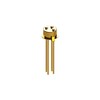
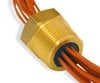
UL & Atex/IECEX Feedthroughs
Featured Product from Douglas Electrical Components

The early 2026 industrial fires at the Valero Port Arthur refinery and a Pasadena chemical plant in Texas served as stark reminders of the volatile nature of hazardous processing environments. For engineers and systems designers, these high-profile incidents underscore a critical reality: maintaining facility safety requires absolute reliability from every single system component, no matter how small or hidden.
While incident investigations typically scrutinize large-scale process failures or major material releases, minor components frequently dictate the boundary between safety and disaster. Electrical penetration points—where power and signal lines pass through protective enclosures—represent a primary, yet frequently overlooked, vulnerability.
The Hidden Risks of Electrical Penetration Points
Refineries, chemical processing plants, and fuel handling systems operate under uncompromising safety and containment mandates. Electrical entry points must maintain strict enclosure integrity while simultaneously allowing necessary connectivity. Because they sit precisely at the boundary between internal process environments and external conditions, any minor design flaw or sealing degradation poses a severe threat over time.
Several hidden factors elevate the risk profile of these penetration points:
- Continuous Environmental Stress: Sealing integrity is constantly challenged by fluctuating pressures, extreme temperatures, and ongoing equipment vibration.
- Undetected Material Degradation: Systems often rely on small-scale sealing elements that wear down gradually, remaining unnoticed during standard daily operations.
- Dual Exposure: Feedthrough points are uniquely vulnerable because they are simultaneously exposed to internal process chemicals and external environmental stressors.
- Component Oversight: Facility operators occasionally rely on standard, non-specialized components in highly sensitive areas that strictly require specialized, certified protection.
Common Electrical Interface Failure Modes
Electrical failures in explosive atmospheres are rarely sudden, isolated events. They typically stem from gradual degradation at connection points where sealing, insulation, and electrical continuity fail under operational stress. When these interfaces compromise, they create direct ignition sources or allow hazardous substances to breach secure areas.
Engineers must design systems to prevent the most common interface failure modes:
- Gas Ingress: Failed seals at cable entries allow flammable gases or vapors to leak into electrical enclosures, creating an immediate explosion hazard.
- Loss of Sealing Integrity: Improper installation or material aging leads to slow, silent leak pathways.
- Electrical Arcing: Loose terminations, increased resistance, or microscopic contamination cause localized overheating or sparking under load conditions.
- Insulation Breakdown: Continuous temperature cycling and exposure to corrosive media weaken insulation, triggering dangerous electrical faults.
The Shield of Safety: UL, ATEX, and IECEx Certifications
Controlling risk in explosive atmospheres requires a rigid, structured certification framework. Because even a microscopic breach in a seal can ignite a catastrophic event, components must be validated to perform under worst-case fault conditions.
Three global standards form the backbone of hazardous location compliance:
- ATEX: A European Union regulatory framework mandating that equipment used in potentially explosive atmospheres is designed and tested to eliminate ignition sources.
- IECEx: An internationally recognized certification system that harmonizes safety standards across global regions, verifying consistent explosion protection.
- UL: A framework focused heavily on North American installations, validating electrical safety, fire resistance, and performance under defined conditions.
How Certified Feedthroughs Eliminate Weak Points
Certified hermetic feedthroughs address interface vulnerabilities by establishing an absolute, tested barrier between hazardous zones and protected environments. Unlike standard entries, certified designs are heavily stress-tested against pressure spikes, thermal extremes, and electrical faults.
By implementing UL and ATEX/IECEx-certified feedthroughs, facilities achieve sealed electrical isolation to prevent gas and moisture migration, control ignition risks by keeping conductors entirely insulated, and maintain mechanical and electrical stability despite system pressure fluctuations. Ultimately, these specialized components eliminate the electrical penetration interface as a weak point, drastically reducing the likelihood of catastrophic plant explosions.