Why Hydrogen sulfide is So Dangerous
Featured Product from Environics, Inc.
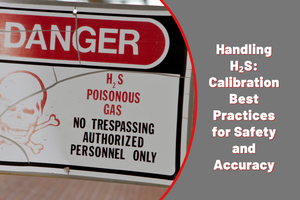
Handling Hydrogen sulfide : Calibration Best Practices for Safety and Accuracy
Hydrogen sulfide is a silent threat, undetectable by sight and capable of dulling the sense of smell before its presence is noticed. This gas is common in oil refineries, wastewater plants, and mining operations, where confined spaces and reactive materials make its presence especially hazardous. Maintaining safety and achieving accurate detection in these settings depends on more than just having the right equipment. While gas detectors are the first line of defense, their effectiveness depends entirely on accurate calibration. Without it, even the most advanced detection systems can mislead, leaving workers vulnerable and safety protocols undermined. Preventing exposure begins with precision, and that precision starts with how well instruments are maintained and calibrated.
Why Hydrogen sulfide is So Dangerous
Hydrogen sulfide poses multiple hazards that make it uniquely difficult to manage in industrial environments. It’s not just its smell or toxicity that raises concern, but how easily it bypasses human senses and corrodes critical infrastructure.
- Toxic at low concentrations: Just 10 parts per million (ppm) can cause eye irritation and respiratory discomfort. At 100 ppm, it can impair the sense of smell, making it difficult to detect further exposure. Concentrations of 700 ppm or more can lead to unconsciousness or death within minutes.
- Corrosive to equipment: Hydrogen sulfide reacts with metals, especially in moist environments, leading to sulfide stress cracking and the formation of iron sulfide scales. The result of this is accelerated wear on pipelines, storage tanks, and valves, increasing the risk of mechanical failure.
- Highly flammable: Hydrogen sulfide has a wide explosive range in air, from 4.3 to 46 percent by volume, which makes it a fire and explosion risk in poorly ventilated areas.
- Difficult to detect unaided: At higher concentrations, H?S quickly paralyzes the olfactory nerves, meaning workers can no longer smell the gas even as it becomes more dangerous. This means human detection will be unreliable and highlights the importance of properly maintained monitoring systems.
Given these risks, dependable gas detection is not just beneficial but necessary. For that detection to be trustworthy, every sensor reading must reflect reality. Achieving that level of confidence requires consistent, well-executed calibration.
Calibration Best Practices for Hydrogen sulfide Safety and Accuracy
Accurate calibration is what allows Hydrogen sulfide detectors to function as reliable safety tools. It ensures that alarms sound when danger is real and that workers are protected by timely, trustworthy information. In its absence, both safety responses and technical systems can fail when they’re needed most.
1. Use certified and traceable calibration gas
The accuracy of any calibration depends on the quality of the gas used. If that reference point is unreliable, every safety measure built on it becomes less effective.
- Select gas certified to national standards such as NIST.
- Align the concentration with the detector’s operating range, commonly 10, 25, or 50 ppm.
- Store cylinders upright in cool, dry environments to maintain stability.
- Verify expiration dates before each use to avoid degraded calibration gas.
2. Begin with a zero calibration
Zero calibration sets a clean baseline before span calibration. This step is critical in ensuring that detectors can differentiate between clean air and a true Hydrogen sulfide's presence.
- Introduce only Hydrogen sulfide-free air or nitrogen to establish the baseline.
- Conduct the procedure in a stable, uncontaminated space for accuracy.
3. Perform bump tests daily in high-risk environments
Daily bump tests help confirm that detectors are operational and alarms are functioning. Within hazardous areas, even a minor failure can have serious consequences, so early detection of sensor issues is vital.
- Expose the detector briefly to a known Hydrogen sulfide concentration to check sensor response.
- Confirm that audible, visual, and vibration alarms trigger correctly.
- Monitor response time and consistency to detect early signs of sensor drift.
4. Schedule regular full calibrations
Full calibration ensures that detectors measure Hydrogen sulfide concentrations accurately across their full detection range. It corrects for sensor drift and confirms reliability in real-world conditions.
- Establish a monthly routine for high-exposure or demanding environments.
- Extend intervals to quarterly in lower-risk, more stable conditions.
- Reassess calibration after sensor exposure to high gas levels, maintenance, or questionable performance.
5. Calibrate in controlled conditions
Environmental factors can distort calibration and lead to inaccurate readings. Conducting calibration in a controlled setting ensures consistency and keeps results aligned with field conditions.
- Avoid performing calibration in areas with high airflow, humidity, or chemical vapors.
- Allow the detector to reach operating temperature before starting.
- Keep potential contaminants, such as solvents and exhaust, well away from the work area.
Environics Solutions for Safer Hydrogen sulfide Calibration
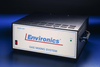
Effective Hydrogen sulfide safety begins with accurate calibration. However, it is the quality of the tools behind the process that makes those standards sustainable. At Environics, we develop calibration systems that help ensure gas monitors deliver reliable, traceable readings every time. Our ambient air calibrators, with dedicated gas channels for gases like Hydrogen sulfide, are engineered for consistency and built to meet the demands of high-risk environments. For applications requiring calibration at higher concentrations than ambient (% levels), the S4040 is the recommended unit. With programmable automation and support for NIST-traceable standards, our systems give teams the confidence to act on every alarm, knowing their instruments are calibrated to perform.
Follow us on:
Meet Environics! Check out this short video on our available products. We design, manufacture and sell gas flow instrumentation, specializing in customizing our units to fit the needs of our customers
Environics
Environics is a world leader in computerized gas flow instrumentation. Our headquarters for design, manufacturing, sales and service is located in a modern 11,000 square foot facility in Tolland, Connecticut. We are ISO 9001 certified, having received ISO 9001 Quality Systems Certification in April, 1997.
As of April 2011, we are a Women Owned business, certified through the Woman Owned Small Business Program run by the United States SBA. Environics was awarded the 2020 Family Business of the Year by the CT District SBA based on our growth over the past 15 years.
We encourage you to challenge us with your most difficult requirements. We specialize in custom systems. We have thousands of systems in the field and have developed an extensive library of applications and solutions to meet our customers' needs. The application of our technology has enabled us to become the world leader in user-friendly computerized gas flow instrumentation.
At Environics, our team is dedicated to customer service before, during and after your system is built. We stand by our systems and believe in building long-term relationships with our customers.