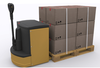
Switching to lithium pallet jack batteries
Featured Product from Green Cubes Technology
Reducing Total Cost of Ownership in Warehousing with Lithium Pallet Jack Batteries
In warehouse operations, cost efficiency extends well beyond the purchase price. The real cost is measured in daily operations, equipment performance, energy consumption, maintenance, and labor—all of which contribute to the total cost of ownership (TCO). As warehouses strive to become leaner and smarter, more operators are turning to battery technology.
Among the most promising developments? The switch from lead acid to lithium pallet jack batteries. This shift enables facilities to reduce long-term costs, downtime, and make better use of labor and energy.
The Hidden Costs Behind Conventional Power Sources
Lead-acid batteries have long been the industry standard for pallet jacks. But the costs of these systems are frequently overlooked—until they mount up. Warehouses usually cope with:
- Regular watering and cleaning of batteries
- Designated charging areas with ventilation systems
- Long charge and cool-down times
- High energy consumption and heat loss
- Battery swaps that interrupt workflows
- Shorter life cycles, leading to frequent replacements
These “normal” processes drain time, space, and money. But a lot of managers still think that traditional batteries are cheaper just because they cost less up front.
How Lithium Technology Cuts Total Cost of Ownership
By switching to lithium pallet jack batteries, warehouses can directly address each of the inefficiencies outlined above. These batteries cost more at first, but over time they always lower costs for energy, maintenance, and labor.
Let’s break down where the savings happen—and why it matters.
Minimal Maintenance Requirements
Lithium batteries require no watering, no acid checks, and no equalizing charges. Maintenance routines that previously occupied technician hours can be redirected toward more productive tasks. In environments where staffing is tight or shifts run back-to-back, eliminating battery upkeep reduces labor strain and lowers the risk of maintenance errors.
Moreover, the sealed design of lithium batteries eliminates the risk of acid leaks, corrosion, and fume exposure—making the workspace safer and cleaner without needing additional ventilation systems or PPE protocols.
Faster Charging, Less Downtime
It can take up to 8 hours for a regular battery to fully charge, and it may need an extra 8 hours to cool down. This not only makes equipment downtime longer, but it also means that more batteries are needed to keep things running.
In contrast, lithium pallet jack batteries typically charge in 1 to 3 hours—and support opportunity charging. That means operators can plug in during breaks, lunches, or shift changes without damaging battery health. The need for backup batteries is reduced, and equipment can remain on the floor longer throughout the workday.
Energy Efficiency That Scales
Energy efficiency is important because electricity prices are always changing and sustainability is becoming a bigger part of business strategy. Lithium batteries can charge more than 95% of the time, while lead-acid batteries can only charge 70–80% of the time. There is less heat loss, which means lower monthly power bills and a smaller impact on the environment.
When applied to pallet jack fleets, this improvement compounds. Large warehouses with dozens or hundreds of vehicles can save tens of thousands of dollars annually on energy.
Longer Battery Lifespan Reduces Replacement Costs
Another significant factor influencing TCO is battery life expectancy. The typical lifespan of lead-acid units ranges from 1,000 to 1,500 cycles, contingent on usage and upkeep. In contrast, the average lifespan of lithium pallet jack batteries is between 2,500 and 4,000 cycles. Even higher is possible with some industrial-grade models.
With fewer replacements needed over the years, procurement costs drop significantly. Warehouses also reduce downtime from battery swaps and avoid disruptions to busy production schedules.
Better Use of Facility Space
Battery rooms, ventilation setups, and racks of backup batteries all take up space that could be used for revenue-generating activity. Industrial lithium battery systems allow for a more flexible layout since they charge cleanly and don’t emit harmful gases. Many warehouses are able to eliminate dedicated charging rooms altogether.
By getting back space, facilities can increase their inventory, improve their workflow, or make traffic patterns safer, all of which help operations run more smoothly.
Smarter Energy Management
Battery management systems (BMS) are now built into a lot of industrial lithium battery systems. These check the charge level, temperature, and cycle history in real time. The data helps managers figure out how vehicles are used, stop problems before they happen, and make charging schedules work best for all of them.
Additionally, predictive maintenance is supported by smart monitoring, which lowers the likelihood of unplanned battery failure and enables facilities to more strategically plan downtime.
Improved Workplace Safety
The shift to lithium isn’t just about cost savings. It also leads to a safer working environment. Lead-acid batteries can leak, emit hydrogen gas during charging, and require careful handling. Accidental spills, burns, and inhalation risks are not uncommon.
Lithium pallet jack batteries, by contrast, are sealed and chemically stable. They include protective circuits against overcharging, deep discharging, and short circuits. For warehouse teams, this translates to fewer hazards and fewer safety incidents—an operational win on every level.
Forward-Looking Warehouses Choose Smarter Power
Warehouse operations always try to cut long-term costs, especially since labor costs are going up, profit margins are getting smaller, and people are demanding more environmentally friendly products. One of the most direct ways to make a difference is to update battery technology.
Choosing lithium pallet jack batteries is a strategic step toward a more efficient operation. From fewer maintenance interruptions and lower energy costs to longer battery lifespan and safer work conditions, lithium solutions help warehouses achieve greater consistency and predictability in their operations.
Modernizing equipment isn’t just a trend anymore; it’s becoming the smarter standard as more facilities do it. Warehouses that want to cut costs and find a reliable solution are now looking more closely at their total ownership costs and finding that industrial lithium battery systems provide all the necessary benefits.
Follow us on:
Green Cubes Technology
Green Cubes Technology develops and manufactures a complete portfolio of modern electrification power solutions, including the market-leading lithium Ion (“Li-ion”) battery. Green Cubes clean, connected, and cost-efficient power solutions allow industrial customers to transition away from fossil fuels and legacy power sources such as lead-acid and internal combustion engines (ICE).
Since the inception of Green Cubes Technology, our focus and direction has never wavered. The Green refers to the eco-friendly and energy-efficient nature of our rechargeable battery products. This is never more important as our products are replacing toxic and inefficient Lead Acid batteries or Internal Combustion Engines (ICE) in high-use and cyclic applications. The Cubes refers to the reusable building blocks that we use in the design of our products. By using multi-purpose technology platforms, we can quickly and efficiently deliver performance- and cost-optimized solutions to our customers. The Technology refers to the latest technology that we qualify and utilize to build our products, which includes cell chemistries, microprocessors, displays and packaging materials.
Green Cubes sells to a broad array of OEM and industrial customers across 3 platforms (Mobile, Motive and Stationary) and across multiple applications.