HOW HEATERS ARE USED-TEST & MEASUREMENT EQUIPMENT
Featured Product from Backer Hotwatt Inc.
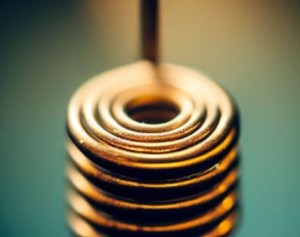
Heating elements are used in test and measurement equipment for a variety of functions that serve to improve the accuracy and reliability of test results. Commonly, heaters are employed to control temperature, enable thermal cycling, facilitate material testing, simulate environmental conditions, and maintain stability and calibration.
Temperature Stabilization: Some test and measurement equipment require a stable temperature environment for accurate measurements. Heaters are used to control the temperature and ensure that the equipment operates within a specific temperature range. This is particularly important for instruments, such as environmental chambers, thermal analyzers, and certain types of sensors.
Thermal Cycling: In certain testing scenarios, it is necessary to subject the equipment or the test samples to repeated heating and cooling cycles. Heaters are used to raise the temperature to a desired level, and then the cooling mechanism is employed to rapidly lower the temperature. This thermal cycling process helps simulate real-world conditions and assess the performance of the equipment or the tested materials.
Material Testing: Some materials exhibit different characteristics or behaviors at varying temperatures. Heaters can be used to heat up samples or components being tested to specific temperatures, allowing researchers or engineers to study their thermal properties, thermal expansion, or other relevant parameters. This is common in applications, such as thermal conductivity measurements, coefficient of thermal expansion analysis, or temperature-dependent electrical characterization.
Environmental Simulations: Certain test and measurement equipment aim to simulate specific environmental conditions. Heaters play a crucial role in replicating these conditions by generating the necessary heat. For example, in environmental chambers used for testing electronic devices or components, heaters are used to raise the temperature to simulate extreme hot conditions or accelerated aging tests.
Stability and Calibration: Some instruments require precise calibration, and heaters are used to ensure stability and accuracy. By maintaining a constant temperature, heaters help stabilize the internal components of the equipment, minimizing any drift or variations caused by environmental changes. This is particularly important for high-precision instruments, such as spectrometers, oscilloscopes, or voltage references.
Certainly, with all these considerations, a reliable heating element is critical to any thermal system, as their usage depends on the specific requirements and objectives of the testing or measurement process.