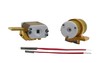
Micro-Cartridge Heater Selection for Diagnostics
Featured Product from Backer Hotwatt Inc.
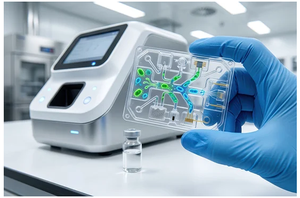
A diagnostic analyzer that takes 40 seconds too long to reach temperature, or runs a degree cooler at one end of the sample block, can cost a lab reagents, reruns, and time. This article from Backer Hotwatt explains how to choose a micro-cartridge heater that avoids those problems.
It covers heaters as small as 1/8" (about 3 mm) and compares three families: Low-Watt for steady holding temperatures, Superwatt for fast warm-up and recovery, and SunRod for serviceable designs with heat all the way to the tip. A worked example shows how to size heaters for a 40 g aluminum block that has to go from 25 °C to 95 °C in 60 seconds.
The article lists six questions to answer before you specify a heater: available space, power and speed, watt density, supply voltage, lead routing, and sensor placement. It also gives starting points for PCR and thermal cycling, incubation blocks, blood/gas analyzers, reagent pre-warming, and microfluidic valves. A section on common mistakes covers loose bores, too much watt density, stressed leads, and late design changes.
Backer Hotwatt has worked with medical equipment makers for more than 70 years. Click here to read the full article:
A diagnostic analyzer that takes 40 seconds too long to reach temperature, or runs a degree cooler at one end of the sample block, can cost a lab reagents, reruns, and time. This article from Backer Hotwatt explains how to choose a micro-cartridge heater that avoids those problems.
It covers heaters as small as 1/8" (about 3 mm) and compares three families: Low-Watt for steady holding temperatures, Superwatt for fast warm-up and recovery, and SunRod for serviceable designs with heat all the way to the tip. A worked example shows how to size heaters for a 40 g aluminum block that has to go from 25 °C to 95 °C in 60 seconds.
The article lists six questions to answer before you specify a heater: available space, power and speed, watt density, supply voltage, lead routing, and sensor placement. It also gives starting points for PCR and thermal cycling, incubation blocks, blood/gas analyzers, reagent pre-warming, and microfluidic valves. A section on common mistakes covers loose bores, too much watt density, stressed leads, and late design changes.
Backer Hotwatt has worked with medical equipment makers for more than 70 years.
https://marketing.hotwatt.com/blog/micro-cartridge-heater-selection-for-diagnostics