P41000AG - Nominal and Overcurrent Monitoring
Featured Product from Knick Interface LLC
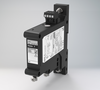
Knick Interface P41000AG Adaptive Gain Current Transducer: One Device for Two Critical Jobs
In high power electrical systems, overcurrent events aren't just an inconvenience, they are a costly risk to both equipment and personnel. Protection relays, high-speed circuit breakers, and other critical infrastructure components are constantly being stressed by both routine loads and unexpected fault conditions. Monitoring these situations accurately isn't optional, it is essential for safe, reliable operation. Knick’s P41000AG Transducer enables both nominal and overcurrent measurements in a compact, all-in-one solution, monitoring up to 11x the rated current in systems up to 3.6 kV.
Built to monitor both regular supply current and sudden overcurrent events, the P41000AG adaptive gain transducer eliminates the need for multiple signal conditioners or additional downstream equipment. This device measures current through mV drops in a shunt resistor, capable of monitoring low 30 mV shunts to minimize heat loss, or other standard shunts such as 60 mV or 100 mV. Whether tracking the health of circuit breakers over time or trying to catch a damaging short circuit before it's too late, the P41000AG is the two-in-one solution designed to keep protection systems one step ahead.
A Deeper Look: Adaptive Gain Technology in Action
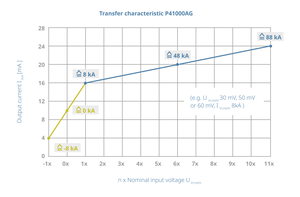
The P41000AG stands apart because of its “Knick Curve”, a transfer characteristic that provides high accuracy in normal operation while also capturing extreme overcurrent values when a fault occurs. The device operates with two separate linear gain ranges:
- From 0 to 100% of the nominal current, it outputs a signal between 4 and 16 mA, offering precise resolution during typical operation.
- When the current exceeds nominal (i.e. in a fault condition), the unit automatically adapts, switching to a second gain range that maps current up to 11x nominal, using a signal range of 16 to 24 mA (or 6x nominal if a control system has a maximum monitoring value of 20 mA).
This continuous, dynamic range adaptation ensures no vital information is lost when high current events occur, while still maintaining excellent sensitivity during normal conditions.
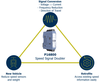
An example of the P41000AG’s unique dynamic range in action can be found in traction power substations, where precise current monitoring is essential for delivering power to passenger transit systems. In this setting, the P41000AG excels by measuring both bi-directional current and overload conditions. The ability to capture bi-directional current provides insight into several critical scenarios: regenerative braking on the rail line, normal operating loads, and transient overload events during faults or switching.
Tracking these conditions provides valuable operational data and early indicators of system stress. For instance, if a breaker is repeatedly subjected to high regenerative current or brief overloads, the P41000AG can detect the magnitude and duration of these events. This allows maintenance teams to identify signs of wear and schedule service proactively, before equipment failure disrupts operations.
The P41000AG also boasts many of the same device characteristics as Knick Interface’s trusted, industry standard, P41000 transducer. This includes up to 3600 V working isolation and 15 kV test voltage rating; a T90 rise time of 100 µs, ideal for capturing dynamic fault behavior; and compatibility with 30…120 mV shunt voltages.
Why It Matters: Real Pain, Real Risk, Real Solution
Traditional current monitoring devices aren’t designed to handle the full range of current events that can occur, usually measuring just the nominal load. When a fault like a short circuit happens, these devices then either saturate, lag, or miss the spike entirely, resulting in incomplete data. This type of misinformation is a pain point in environments where uptime is critical or where protection depends on precise event tracking. Without insight into both the magnitude and duration of overload events, operators are forced into guesswork or reactive maintenance strategies. This strategy often comes at a monetary expense and can pose a hazard for personnel.
The P41000AG solves this by enabling condition-based maintenance. By capturing the full fault current profile, it gives engineers the visibility needed to evaluate system health, spot early wear signs, and replace components before failure. This is all done without extra hardware or measurement paths, saving installation time and money.
Unlocking Efficiency in Design and Deployment
Beyond performance, the P41000AG also saves space, reduces cost, and simplifies system architecture. With one device doing the job of two, panel space is freed up, wiring is reduced, and downstream equipment, like protection relays, need fewer inputs. Whether for designing a new system or retrofit of an existing one, the installation becomes cleaner, smarter, and more scalable.
Smarter Current Monitoring with the P4100AG
With the P41000AG, Knick redefines what a current transducer can do, not only serving as a measurement device, but a protection strategy. From capturing everyday loads with precision to catching overcurrent in microseconds, this transducer equips protection systems with the information needed to act faster and last longer.
When working with high voltages exposed to fault risk, often encountered when managing aging traction power infrastructure, the P41000AG offers the performance, versatility, and isolation needed, all in one robust package.
Discover how Knick’s solutions can enhance system capabilities and push the boundaries of what is possible in high voltage monitoring by following the link below.
https://www.knick-international.com/en/interface-technology