Application Note - H2 Stack/String Monitoring
Featured Product from Knick Interface LLC
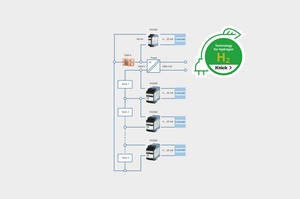
Precise Voltage, Current, and Temperature Monitoring in Electrolyzer and Fuel Cell Systems
This hydrogen system monitoring application focuses on precise voltage, current, and temperature measurements in electrolyzer and fuel cell stacks and strings. These parameters are essential for ensuring safe, efficient hydrogen production and its reliable conversion into electrical energy. Critical performance requirements include high isolation up to the stack or string level, continuous and stable long-term monitoring, compliance with safety standards, and zero need for recalibration over time.High-isolation measurement for stack/string monitoring in H2 applications
As hydrogen plays an increasingly important role in energy storage and transport, maintaining efficiency and safety in electrolyzer and fuel cell systems is more critical than ever. These systems operate at high DC voltages and require accurate, real-time monitoring to function effectively. Continuous measurement at both the stack and string levels supports predictive maintenance and enhances overall system reliability. Knick’s transducers are specifically designed to meet these demands, offering high working isolation that exceeds typical system voltages and delivering the long-term reliability needed to ensure safe, uninterrupted operation.
Description and requirements
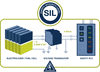
Modern electrolyzers and fuel cells are built by wiring individual cells in series to form stacks, which are then combined into high-voltage strings. While each cell typically operates around 3 V, total string voltages can reach up to 1500 V DC and continue to rise as industry demand grows. To maintain safe and efficient operation, precise monitoring of voltage, current, and temperature at both the stack and string levels is essential for diagnostics and early detection of wear. Without this monitoring, operators risk damaging electrolyzer and fuel cell systems, which can compromise safety and reduce hydrogen production efficiency.
Given the high voltages and potential for voltage surges, measurement equipment must provide strong electrical isolation, not only from the measured signal but also from full system-level potentials. Additionally, the monitoring solution must be durable, maintenance-free, and capable of withstanding environmental stress while ensuring the safety of both operators and equipment.
Knick's Advantages
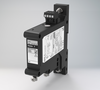
Knick’s transducers deliver high performance measurement with industry leading continuous isolation up to 3.6 kV, exceptional long-term stability, and a compact DIN rail design making them well-suited for integration into electrolyzer and fuel cell systems. They provide accurate voltage, current, and temperature monitoring without the need for recalibration and are supported by a field-proven MTBF rated in the hundreds of years. Built to withstand high potential and noise-heavy environments, these transducers ensure safe, interference free operation. For applications requiring functional safety, Knick also offers SIL rated monitoring solutions to support compliance with evolving hydrogen system standards.
Reliability in Critical Environments
With Knick transducers, operators can reliably monitor electrolyzer and fuel cell performance at both the stack and string levels, enabling early detection of degradation and preventing costly failures. This level of insight supports predictive maintenance strategies, maximizes system uptime, and ensures safe, continuous operation in demanding hydrogen applications.
Knick delivers the clarity and confidence needed for high voltage measurements by combining advanced isolation, long-term stability, and precision. Our commitment to safety, accuracy, and performance makes Knick a trusted partner in the evolving hydrogen energy landscape.
Check out the full article at our website here: Electrolyzer Monitoring