Building Reliable Robotic Solutions
Featured Product from Portescap

Building Reliable Robotic Solutions: Partnering for Success in Micro Motion Control
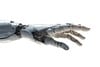
Advancements in robotic technology continuously enhance lives by supporting applications in medicine, industrial automation, and other sectors. For example, myoelectric prosthetic limbs improve patients' independence and quality of life; surgical robotic technology enables minimally invasive surgeries, reducing recovery time and minimizing scarring; and humanoid and inspection robots can perform dangerous and repetitive tasks, providing humans with safer work conditions.
Despite these benefits, numerous challenges arise during the product development process of robotic applications, as technical requirements, integration, and commercial needs requires thoroughly determining which factors are critical and which are flexible. Common decision points to address include:
| • | Which motion control technology can solve my robotic challenge most efficiently? |
| • | What is the best approach to select, test, and validate the sub-components for my application? |
| • | How can I navigate commercial challenges such as integration, designing for manufacturability, compliance, and regulatory requirements? |
| • | Should I execute everything in-house with my own resources? |
This paper explores the typical journey faced by OEMs when designing and selecting motion control systems for their robotic devices, aiming to raise awareness of best practices to help you execute your next product development project more efficiently.
CHALLENGES OF MOTION CONTROL DEVELOPMENT
Selecting the working point(s) is one of the first steps engineers face when designing electromechanical solutions. Torque, radial, and axial loads quickly become critical factors that need careful attention. Additionally, the development team must consider physical space and weight limitations, as well as the desired motion profile of the device, including how smooth, responsive, and precise its movement should be.
Only after investing considerable time and effort into these aspects do other factors typically come into play, such as suitability for the application's environment, design for manufacturability, integration, and compliance with regulations. Depending on how much time and effort have been spent without considering these factors, the project may encounter hurdles and roadblocks that impact timelines and generate cost overruns due to the need to revise or change technical attributes and previously selected components.
Figure 2 depicts the important interrelationship among all these factors in developing an optimum solution. Much of this innovation is driven by advanced motion control systems and continual component miniaturization.
THE MISUNDERSTOOD CHALLENGE OF MINIATURIZATION
Miniaturization plays a crucial role in advancing robotic devices as it inherently addresses many technical requirements, such as meeting the operating points with the desired motion profile, operating reliably at maximum efficiency, fitting within limited physical space, and integrating smoothly with other components.
For many robotic devices supporting life-critical applications, reliability becomes a paramount concern. To develop reliable miniature products and solutions, engineers must tackle complex problems such as minimizing heat, ensuring component compatibility, and considering overload and continuous operation along with other potential failure modes.
Instead of asking "Can I have it all?", consider the question, "What's most important for the success of my robotic application?" This balancing act can be less burdensome with the support of an experienced partner.
ADDRESSING THESE CHALLENGES HEAD-ON
Reputable and experienced motion control solution providers recognize these challenges and can support development plans for timely and cost-efficient execution. Things to look for in a motion control partner include:
| • | Technology diversity and capabilities |
| • | Application-specific knowledge and understanding |
| • | Flexibility to support and collaborate |
| • | Speed to market options – including COTS, quick configurations, samples, and custom designs |
| • | Leadership in innovation and product development |
By relying on motion control experts with diverse solutions, an understanding of manufacturability methods, and awareness of commercial challenges, you can leverage alternative paths for technology selection, such as choosing between Commercial- Off-The-Shelf (COTS) solutions and customization. Additionally, these experts provide technical support throughout the entire development process to ensure maximum reliability and integration.
CONCLUSION
In the complex landscape of robotic application development, it is essential to think beyond just speed and torque; it’s equally crucial to consider long-term reliability, integration, and precision. Additionally, looking beyond the next compliance approval milestone will ensure that your solutions are sustainable and adaptable in the long run. Most importantly, seek a value-adding partner, not just a supplier. Lasting partnerships are built on collaboration and active engagement, fostering trust and innovation.
Through thoughtful consideration of all these factors and the support of a reliable partner, you can overcome the challenges of motion control development and achieve optimal solutions for your robotic applications. At Portescap, collaboration is one of our best attributes. We look forward to start collaborating and take your robotic projects to the next level.