

A CNC Part Is not Done Until it is Finished
Service Detail from Protomatic, Inc.
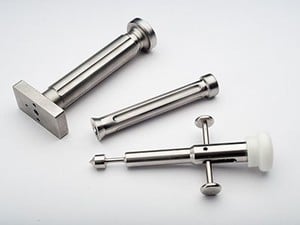
When parts are unfinished, the often look incomplete. The right finish conveys a perception of higher quality, which customers certainly appreciate.
More importantly, however, finishing allows for better observation of small flaws. When properly finished, it is easier to see if a part has been adequately de-burred, and if small machining transitions such as tram line or cutter-to-cutter have accurately completed.
Following are some of the metal and plastic standard finishes used at Protomatic, along with end results.
As-machined vs fine grain sand The most common finish is simply as-machined. It is typically specified by the Micro Finish call-out on the print. The most common is an "Ra of 63 micro inches" or less. The second most common is a fine grain finish.
Sheet metal - timesaver sanding Prior to bending, a "Timesaver" sanding is commonly performed. This is a relatively coarse sand of the two flat surfaces prior to bending. Bend contact marks will be present after forming.
Vibratory media tumbling This type of finishing is usually defined by the shape of the media used to perform the tumbling operation. Since vibratory tumbling is a gravity-based energy method, the speed is controlled by the size of the media. Heavier and larger media is faster, but size and shape control the level of detail when deburring inside corners. These parts are individually tumbled to prevent part to part nicks.