Load Pins Maximize Crane Lifting Height
Featured Product from Strainsert
Load Pin Advantage Part 2: Crane & Hoist Maximum Lifting Height
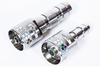
In Part 1 of this Load Pin Advantage series, we explained how using a Strainsert Load Pin in place of an existing pin that is present in the application hardware many times provides significant advantages when measuring and monitoring loads, as compared to other force sensor designs.
That includes ease of pin installation and integration, direct force measurement in the load path of interest, real-time load monitoring on critical pin joints and lower overall project costs are common.
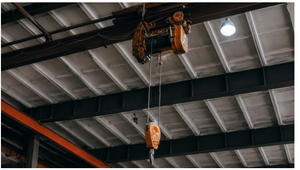
There is also a secondary advantage to using Strainsert Load Pins in crane and hoist lifting applications. This results from the Load Pin replacing an existing pin that was accounted for during design and therefore the planned “design lifting range” remains unchanged.
Generally, this is not the case with many other types of load sensor designs, i.e. “below the hook” sensors which add additional length to the rigging system hardware, which decreases the lifting range and potentially limits the crane and hoist use.
A reduction on the maximum lifting height range is undesirable because it can:
- Increase difficulty when handling large or tall loads
- Decrease production efficiency
- Interrupt automated operations and procedures in place
- Require retraining
- Cause nuisance stops
- Restrict facility layout flexibility
- Prevent full utilization of crane capability
Most crane and hoist operators prefer the largest range of use to accommodate varied tasks and maximum performance.
Maximizing the performance and capabilities of the lifting hardware without additional limitations promotes fast, efficient, and safe operation to get the job done as quickly and efficiently as possible.
From a safety perspective, an absolute understanding when the maximum lifting height has been reached and ensuring the crane or hoist travel goes no further is critical to operational success.
Load pins can be combined with relays or other instrumentation to alert operators, prevent accidents, protect wire rope and hoist components, maintain safe mechanical clearances, ensure stable load handling, and support compliance with crane safety standards.
Force Sensor Manufacturer
As a force sensor manufacturer, Strainsert has pioneered the design and manufacturing of custom and standard load pins, flat load cells, load bolts, studs and tension links due to our patented internal gaging process and an unsurpassed dedication to engineering and meeting customer requirements.
What Makes Strainsert Unique in the Force Measurement Industry:
- In Business since 1960
- Products all Made in the USA
- Full Cycle On-Site Manufacturing (From Design to Delivery and Beyond)
- 150+ Combined Years of In-House Engineering Expertise
- Dedicated Repair and Calibration Services
- 2 Year Warranty, Including Custom Solutions
- Warranty Return Rate of Less than 0.5% over the last 10 Years
- 97% On Time Delivery over the last 10 Years
- 15 Corporate Patents
- Important Certifications and Affiliations, including AS9100, ISO9001, ITAR, J-STD-001, CMMC and ASME
Our goal remains to provide the most responsive, accurate, reliable and efficient force measurement solutions for research, testing, weighing, and control applications.