Absolute and Incremental Rotary Encoders
Featured Product from Gurley Precision Instruments

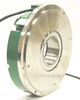
There are two basic types of rotary encoders: absolute and incremental. Absolute rotary encoders provide a coded angle information and avoid time consuming reference measurements or calculation routines in the controller. Incremental rotary encoders provide a square wave or sinusoid output signal and enable counters and PLC to calculate position, speed and distance.
Rotary encoders come in four mechanical configurations: modular (kit-type), shaft, blind hollow-shaft and true hollow-shaft.
The Difference Between Absolute and Incremental Rotary Encoders
There are a few differences between absolute and incremental rotary encoders. Incremental encoders have output signals that repeat over the full range of motion. When the incremental encoder is turned on, the position of an incremental encoder is not known since the output signals are not unique to any singular position. Once an incremental encoder passes an index, which can be a single- or multi-track design, the position information is absolute from that point forward.
Absolute encoders have a unique value (voltage, binary count, etc) for each mechanical position. When an absolute encoder is turned on, the position of an absolute encoder is known. The similarities of both absolute and incremental encoders are form and the issues of count and directional information. They can be obtained from both absolute and
incremental encoders equally.
Gurley offers three technologies for rotary encoders: incremental, true absolute and
our patented Virtual Absolute(R) brand.