
Antireflection Coating Gradient Index Lenses
Description
Antireflection Coating Gradient Index Lenses are optical components designed to minimize reflection and maximize the transmission of light through the lens. These lenses incorporate a gradient index (GRIN) structure, which allows for a gradual change in the refractive index across the lens, enhancing their ability to manage light effectively.
Working Principle
The working principle of Antireflection Coating Gradient Index Lenses involves the combination of gradient index technology and antireflection coatings. GRIN lenses are manufactured by varying the refractive index across the lens surface, allowing light to bend continuously within the lens until it converges at a focal point. This is in contrast to conventional lenses, which bend light primarily at the lens surfaces. The antireflection coatings, typically made of dielectric materials like magnesium fluoride, are applied to the lens surface to suppress glare and stray reflections. These coatings work by creating destructive interference for reflected light, significantly reducing reflection and enhancing light transmission.
Applications
Antireflection Coating Gradient Index Lenses are used in various applications where minimizing reflection and maximizing light transmission are critical. Specific examples include camera lenses, where they help reduce glare and improve image clarity, and solar cells, where they enhance the efficiency of light absorption. They are also used in corrective lenses to reduce glare and improve visual comfort.
Advantages over other Gradient Index Lenses
One of the primary advantages of Antireflection Coating Gradient Index Lenses over other GRIN lenses is their enhanced ability to reduce reflections and increase light transmission due to the antireflection coatings. This makes them particularly useful in applications requiring high optical clarity and minimal light loss, such as high-precision imaging systems.
Limitations
A limitation of Antireflection Coating Gradient Index Lenses is that the effectiveness of the antireflection coatings can be wavelength-dependent. This means that while they may perform exceptionally well at certain wavelengths, their performance might not be as optimal across a broader spectrum unless specifically designed as broadband coatings.
Considerations
When considering Antireflection Coating Gradient Index Lenses, factors such as initial costs, operating expenses, and durability should be taken into account. The initial cost may be higher due to the complexity of manufacturing GRIN lenses with antireflection coatings. However, the enhanced performance can justify the investment in applications where optical clarity is paramount. Durability and maintenance costs are also important, as the coatings can be susceptible to damage from environmental factors, necessitating careful handling and potential replacement over time.
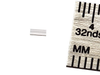
from Newport MKS
The LGI630-2 GRIN Lens has a 0.25-pitch lens that is useful for fiber coupling and collimating and fiber-to-fiber coupling. This SELFOC ® radial gradient index oxide glass general purpose plano-plano lens has a 1.0 mm diameter, a 2.58 mm length, a 0.46 NA, and is antireflection coated to... [See More]
- Diameter / Length: 1
- Lens Features: Antireflection Coating

from Thorlabs, Inc.
At Thorlabs, we constantly reinforce our desire to serve at the pleasure of our customers. From this comes our desire to be connected to our industry in a way that far exceeds what would typically be expected of a vendor. Thorlabs lives this core principle by seeking to enhance, at every turn, the... [See More]
- Focal Length: 1.85 to 1.99
- Diameter / Length: 1.8
- Center Thickness: 4.26 to 5.59
- Lens Features: Antireflection Coating
from LightPath Technologies, Inc.
Gradium ® Lens, single lens replacement for conventional doublets [See More]
- Focal Length: 5
- Diameter / Length: 5
- Center Thickness: 2.9
- Surface Quality: 40-20 Scratch / Dig