
Mechanical Switch / Relay Electromechanical Counters
Description
Mechanical Switch / Relay Electromechanical Counters are devices designed to count mechanical actions or electrical pulses. They are used to track the number of occurrences of a specific event, such as the number of rotations, strokes, or actuations. These counters typically display the count on a mechanical or digital readout, allowing users to monitor and record the data.
Working Principle
Electromechanical counters operate by converting mechanical motion or electrical signals into a countable format. When a mechanical action or electrical pulse is detected, the counter increments or decrements the displayed count. This is achieved through a combination of mechanical components, such as gears and levers, and electrical components, like relays or switches. These counters are useful because they provide a reliable and straightforward method for tracking repetitive events over time, making them essential in various industrial and commercial applications.
Applications
Mechanical Switch / Relay Electromechanical Counters are used in a wide range of applications. For example, pushbutton counters are employed in traffic surveys to count vehicles passing a certain point. Stroke counters find use in printing presses to track the number of pages printed. Revolution counters are utilized in material handling equipment to monitor the number of rotations of a conveyor belt. Additionally, these counters are used in gaming machines to count the number of plays and in vending machines to track the number of items dispensed.
Advantages over other Electromechanical Counters
Mechanical Switch / Relay Electromechanical Counters offer several advantages over other types of counters. They are generally more robust and can operate in harsh environments where electronic counters might fail. Their mechanical nature makes them less susceptible to electrical noise and interference, ensuring accurate counts in challenging conditions. Furthermore, they do not require a power source to maintain the count, which can be beneficial in applications where power availability is limited.
Limitations
Despite their advantages, Mechanical Switch / Relay Electromechanical Counters have some limitations. They tend to have a slower response time compared to electronic counters, which can be a drawback in high-speed applications. The mechanical components are subject to wear and tear, which can lead to maintenance issues and reduced lifespan. Additionally, they may not be suitable for applications requiring high precision or where space is a constraint due to their typically larger size.
Considerations
When selecting a Mechanical Switch / Relay Electromechanical Counter, several factors should be considered. Initial costs can vary depending on the complexity and features of the counter. Operating expenses are generally low, but maintenance costs can arise due to the wear of mechanical parts. Durability is a key advantage, as these counters are built to withstand tough conditions. However, accuracy might be lower compared to electronic alternatives, especially in high-speed or high-precision applications. Replacement and maintenance costs should also be factored in, as mechanical components may need periodic servicing or replacement to ensure continued reliable operation.

from Marsh Bellofram Group of Companies
Five Time Ranges From 0.001 Sec. Replaces Most Electro-Mechanical Timers. Six Single-Cycle and Eight Repeat-Cycle Timing Modes. Easy Programming 7/16" High LCD Display. Sealed Faceplate. Keypad Lockout of Time Setting. Internal Cycle Counter. Data Retention Memory with EEPROM Circuitry. (652-8-2000,... [See More]
- Sensor & Specialized Inputs: Switch
- Functions: Preset; Delay Cycle Timer; Delay On Timer; Delay Off Timer; One Shot Timer; Interval Delay Timer
- Number of Functions: Multi
- Direction: Up Count; Down Count; Bi-directional Counter
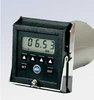
from Marsh Bellofram Group of Companies
Functions As Timer or Counter. Five Time Ranges. Six Single-Cycle and Eight Repeat-Cycle Timing Modes. Sealed Faceplate. Cycle Counter. Count Input Scaling. Data Retention Memory with EEPROM Circuitry. (653-8-2000, 653-8-2001 Models). Data Retention Memory with Lithium Battery. (653-8-3000,... [See More]
- Sensor & Specialized Inputs: Switch; SolidState
- Functions: Preset; Delay Cycle Timer; Delay On Timer; Delay Off Timer; One Shot Timer; Interval Delay Timer
- Number of Functions: Multi
- Direction: Up Count; Down Count; Bi-directional Counter