
-
Supplier: Georgia-Pacific Corporation
Description: requirements, phenolic resin systems have advantages over polyesters, epoxies, and vinyl esters. Cured phenolic resins from GP Chemicals are formulated to be inherently fire-resistant, demonstrate low smoke generation and high-temperature resistance. Phenolic FRP resins are used
- Filler: Aramid Fiber
- Type: Casting Resin, Thermoset
- Features: Composite Material
- Chemical System: Phenolics (Melamine, Furan)
-
Supplier: Georgia-Pacific Corporation
Description: The phenolic resole resin systems designed by GP Chemicals are used in a wide variety of applications and industries. GP® resins are used in fiber-reinforced polymer (FRP) applications with fire safety concerns or high-temperature requirements such as mine ventilation and offshore water pipe
- Chemical Family: All Aldehydes, Formaldehyde
- Trigger: Base
-
Supplier: ASTM International
Description: polymeric matrix composites. The composites of interest are primarily, but not exclusively limited to those containing high modulus (greater than 20 GPa (3×10⁶ psi)) fibers. Furthermore, an emphasis is placed on composites with continuous (versus discontinuous) fiber
-
-
Supplier: ASTM International
Description: part of any composite component design, quality assurance, in-service maintenance, or damage examination. 1.6 This guide summarizes the application of NDT procedures to fiber- and fabric-reinforced polymeric matrix composites. The composites of interest are primarily, but not
-
Supplier: ASTM International
Description: 1.1 This practice describes procedures for shearography of polymer matrix composites and sandwich core materials made entirely or in part from fiber-reinforced polymer matrix composites. The composite materials under consideration typically contain continuous high modulus
-
Supplier: ASTM International
Description: composite panels containing, but not limited to, silicon carbide, silicon nitride and carbon matrix and fibers. 1.5 This practice applies to polymer or ceramic matrix composite structures with inspection surfaces that are sufficiently optically opaque to absorb incident light,
-
Supplier: Norplex-Micarta
Description: MC514MG is a high performance thermoset composite which is manufactured using an electrical grade of woven fiber glass, combined with a high temperature phenolic resin system. The resin system has a specially milled graphitic carbon additive which eliminates stray electrical
- Use Temperature: 311 F
- Industry: Electronics
- Filler: Fabric, Fiber Glass
- Form / Shape: Film / Sheet
-
Supplier: National Coating Corporation
Description: flooring and composite industries. Cotton and paper, etc. saturated with phenolic epoxy or polyester resins for the laminating-composite industry National Coating has the specialized capabilities and facilities to custom treat any size order. National Coating combines the
- Materials: Glass, Paper, Textile
- Features: North America, Northeast US Only, Other, United States Only
-
Supplier: National Coating Corporation
Description: flooring and composite industries. Cotton and paper, etc. saturated with phenolic epoxy or polyester resins for the laminating-composite industry National Coating has the specialized capabilities and facilities to custom treat any size order. National Coating combines the
- Industry: Automotive, Electronics, Energy / Utilities, Marine, OEM / Industrial
- Sealing Processes: Dip / Immersion Coating, Plastic / Resin
- Materials: Glass
- Features: North America, Northeast US Only, Other, Specialty / Other, United States Only
-
Supplier: National Coating Corporation
Description: flooring and composite industries. Cotton and paper, etc. saturated with phenolic epoxy or polyester resins for the laminating-composite industry National Coating has the specialized capabilities and facilities to custom treat any size order. National Coating combines the
- Coating Capabilities: Adhesive / PSA, Sealing / Impregnation, Web Coating
- Industry Served: Architectural / Construction, Automotive, Commercial / Professional, Electronics, Energy / Utilities, Marine, OEM / Industrial
- Materials: Glass
- Services: Inspection / Monitoring, Research & Development
-
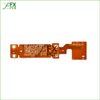
Supplier: FX PCB Co., Ltd.
Description: (0.025 to 2 m) after being nickel-plated first. There are various options available, including carbon contacts, silver-cross or carbon connections, and various solder masks that may be made using a silkscreen, or a method that can be photographed. FR1/XPC These elements can be found in
- Thickness: 0.015748031496062992 inches
- Type: Film / Flexible Substrate



Find Suppliers by Category Top
More Information Top
 Indicates content that may require registration and/or purchase.

-
Micromechanics-based evaluation of the poroelastic effect and stress concentration in thermochemically-decomposed composites
[9] R. M. Sullivan and N. J. Salamon, A finite element method for the thermochemical decomposition of polymeric materi- als - II. carbon phenolic composites , Intl. J. Engng. Sci., 30 (1992) 939-951.
-
Fire Properties of Polymer Composite Materials
Carbon phenolic composites .
-
http://dspace.mit.edu/bitstream/handle/1721.1/49920/31017679-MIT.pdf?sequence=2
Stokes, E.H., 1987, "Moisture Diffusion in Carbon Phenolic Composites ," .
-
http://pages.nxtbook.com/nxtbooks/sampe/journal_20110506/offline/sampe_journal_20110506.pdf
Manufacturing of carbon phenolic composites could be divided into steps pre- sented in Table 1.
-
Thermal Degradation of Polymer Blends, Composites and Nanocomposites
Koo et al. [71] compared the ablative properties of carbon phenolic composite (MX-4926) to laboratory produced carbon nanofibers (CNFs)/phenolic nanocom- posites (CNF-NRAMs).
-
Processing monitoring of carbon/phenolic composites using smart sensors
The M&P approach is further complicated by the addition of oxidation resistant inhibitor powders [1] during the cure process of carbon phenolic composites .
-
Journal of Thermophysics and Heat Transfer > Finite element analysis of poroelastic composites undergoing thermal and gas diffusion
… Salamon, N. J., "A Finite Element Method for the Thermochemical Decomposition of Polymeric Materials— Part I: Theory," International Journal of Engineering Science, Vol.30, No. 4, 1992, pp. 431-441; also "Part II: Carbon Phenolic Compos- ites ," ibid, No. 7 …
-
Evaluation of the interfacial bond properties between carbon phenolic and glass phenolic composites
16. E. STOKES, "Moisture Diffusion in Carbon Phenolic Composites ", presented at the Southern Research Institute, JANNAF Conference, October 1987.
-
Gas chromatography: A new method of non contact NDE for cure monitoring of carbon-phenolic composites for determination of the gelation region for pressure app...
Gas Chromatography: A New Method of Non Contact NDE for Cure Monitoring of Carbon Phenolic Composites for Determination of the Gelation Region for Pressure Application1 .
-
Polymer Nanocomposites: Processing, Characterization, and Applications > Polymer Nanostructured Materials for High-Temperature Applications
Current rocket nozzle assemblies are made of carbon phenolic composites such as MX-4926 from Cytec Engineered Materials (CEM).