
-
Supplier: Walter Surface Technologies
Description: POWER CLEANER 100™ is a highly concentrated cleaner/brightener that quickly breaks down rust, dissolves limescale, eliminates mineral deposits, and brightens metallic surfaces. FEATURES Nonflammable, solvent-free, VOC-free, biodegradable surfactants Fully restores dull or tarnished
- Features: Biodegradable, Foam Free / Low Foaming, Other, VOC Compliant
- Type: Cleaner / Cleaning Agent, Degreaser, Descaler / Desmutter / Dioxidizer, Detergent / Surfactant, Rust / Corrosion Remover, Strong Acid / Mineral Acid Cleaner (0 to 2 pH)
- Full Strength Use: Full Strength (Undiluted) Use
-
Supplier: Walter Surface Technologies
Description: copper and brass Concentrated formula, can be diluted up to 1:40 with water Can be used as an acid wash to remove free iron Water-based, non-flammable Biodegradable, VOC free, solvent free, hydrochloric, hydrofluoric and nitric acid free TIP: neutralize with SURFOX-N after
- Type: Aqueous / Water-based, Cleaner / Cleaning Agent, Degreaser, Descaler / Desmutter / Dioxidizer, Rust / Corrosion Remover, Strong Acid / Mineral Acid Cleaner (0 to 2 pH)
- Features: Biodegradable, Other, VOC Compliant
-
Supplier: Image Supply, Inc.
Description: This fast acting, hydrofluoric acid-based wheel and grill cleaner cleans and restores the shine to wire, chrome and mag wheels, wheel covers and auto grills. Just spray on and rinse off! Harmless to rubber. Dilution: 1:1; Colorless/acidic/pH: <1.0. Gallon pictured. 5 Gal. Pail,
-
-
Supplier: Fortrans Inc.
Description: safe replacement for hydrofluoric acid used to brighten aluminum. Safe-Bright™ uses a new material that received the EPA P2 Pollution Prevention Award. Safe Bright™ will deoxidize and brighten aluminum surfaces as well as hydrofluoric acid without the toxicity and
- Concentration (As Used, by Volume): 50 %
- Type: Aqueous / Water-based, Cleaner / Cleaning Agent, Descaler / Desmutter / Dioxidizer, Detergent / Surfactant, Strong Acid / Mineral Acid Cleaner (0 to 2 pH)
- Features: Biodegradable, Other, Specialty / Other
-
Supplier: Shenzhen Jewellok Technology Co., Ltd.
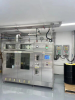
Description: Chemicals Handled HF- Hydrofluoric acid HCL- Hydrochloric acid H2O2- Hydrogen Peroxide KOH- Potassium Hydroxide HNO3- Nitric acid NH4OH- Ammonium Hydroxide H2SO4- Sulfuric acid CDM and CDS Application: Semiconductor Photovoltaic Solar energy Liquid crystal panel
- Body Material: Stainless Steel



Find Suppliers by Category Top
Conduct Research Top
-
A Microfluidic System for Biological Particle Enrichment Using Contactless Dielectrophoresis
. Microfabrication. Deep reactive ion etching (DRIE) was used to etch. a !100O silicon wafer to a depth of 50 mm (Fig. 1AeD). to form the master stamp. Oxide was then grown on the silicon. master using thermal oxidation and removed using. hydrofluoric acid to reduce surface 'scalloping' caused by. the DRIE
More Information Top
 Indicates content that may require registration and/or purchase.

-
The Chemical Formulary, Volume 9
Hydrochloric and hydrofluoric acid cleaners present the danger of corroding the granite.
-
Fundamentals of Pediatric Surgery
Swimming pool cleaners Metal cleaners Toilet bowel cleaners Hydrofluoric acid .
-
Natural Weathering of Granite: A Case Study
Mineral alteration is the result of natural weathering, likely accelerated by strong acidic ( hydrofluoric acid ) cleaners used in 1960s; water leakage at specific locations; and organic growth.
-
[Acute respiratory distress syndrome induced by hydrogen fluoride gas inhalation].
He had been exposed to irritant gas when polishing the inside of a stainless tank using a chemical cleaner containing hydrofluoric acid and nitric acid.
-
Masonry and Concrete > Masonry Construction Techniques
Dried mud may require the use of pressurized water or a proprietary “restoration” type cleaner containing hydrofluoric acid and phosphoric acid.
-
Glass Facade Assessment
Some masonry facade cleaners contain hydrofluoric acid , an acid particularly aggressive on glass.
-
Work-related health emergency cases due to hydrofluoric acid exposures reported to Texas poison centers
A hydrofluoric acid exposure was defined as any expo- sure involving a substance assigned the Generic substance code 0118000 (hydrofluoric acid), 0118280 (rust remover: hydrofluoric acid), or 0201007 (wheel cleaner : hydroflu- oric acid /bifluoride).
-
Evaluation of Cleaning Methods for the Exterior Brick Atthe Brooklyn Historical Society
Only two products resulted in the removal of signif- icant amounts of soiling: Bac2Nu, an ammonium bifluoride-based cleaner, and Restoration Cleaner, a hydrofluoric acid -based cleaner .
-
The Pediatric Upper Extremity
Hydrofluoric acid (wheel cleaner ) Calcium chloride .
-
High-quality self-ordered TiO2 nanotubes on fluorine-doped tin oxide glass
To remove the surface oxide layer on the nanotubes, pre-synthesized nanotubes were immersed in an ultrasonic cleaner with dilute hydrofluoric acid solution for 60 s.